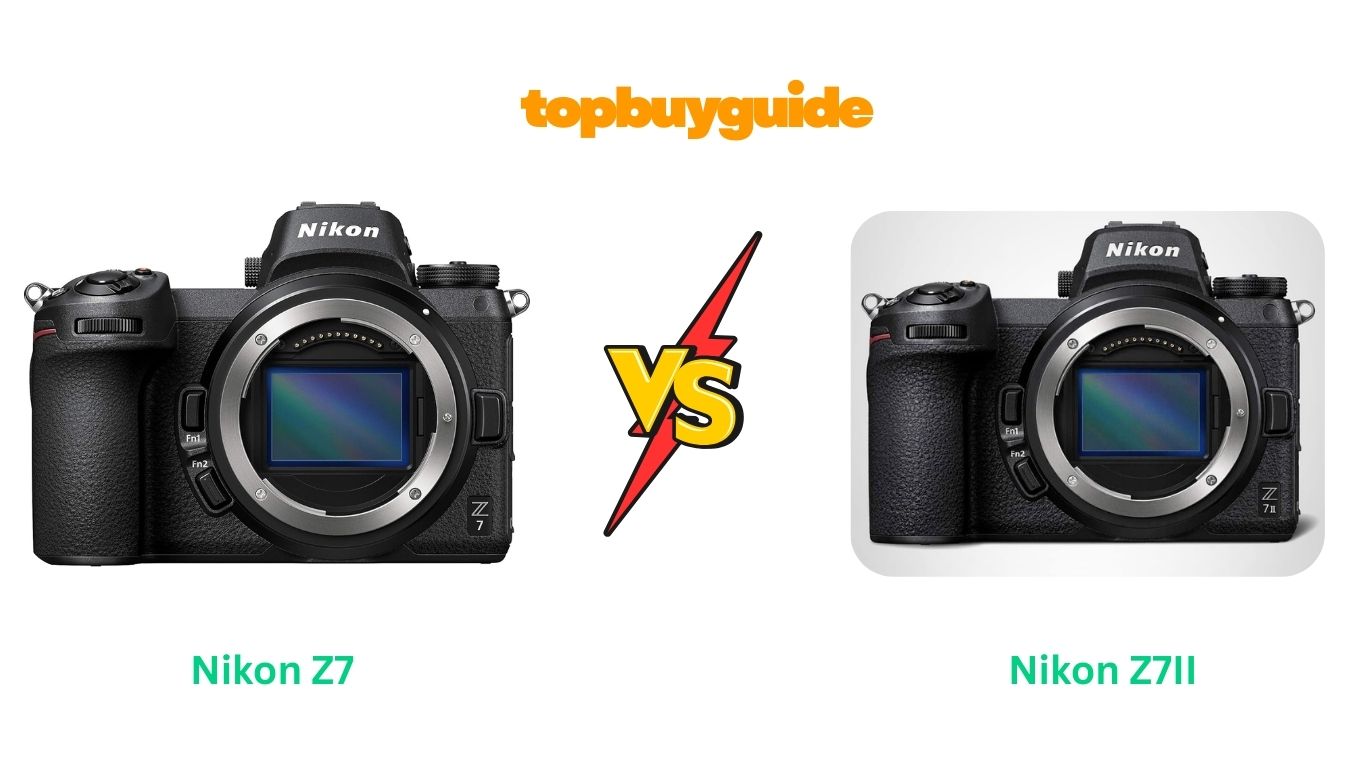
Choosing between the Nikon Z7 and Z7IIcan be tricky for photographers seeking professional-grade mirrorless cameras. If you want faster performance, dual card slots, and better autofocus, the Nikon Z7II is the top choice. Keep reading to discover why this camera outshines its predecessor and which features make it a must-have for enthusiasts and professionals alike.
Why Do I Recommend the Nikon Z7II?
The Nikon Z7II offers noticeable improvements over the original Z7, making it the better choice for serious photographers:
- Dual EXPEED 6 Processors: Z7II delivers faster performance, improved image processing, and smoother operation, whereas Z7 has a single processor.
- Dual Memory Card Slots: Z7II supports CFexpress and SD cards simultaneously for backup and extended storage; Z7 only has a single slot.
- Enhanced Autofocus: Z7II features better low-light autofocus and eye-detection, outperforming the Z7 in challenging conditions.
- Improved Continuous Shooting: 10fps continuous shooting on Z7II versus 9fps on Z7 allows capturing fast action more reliably.
- Better Video Capabilities: Z7II supports 4K UHD 60p video internally with full-pixel readout, while Z7 maxes out at 30p.
- Extended Battery Life: Z7II uses EN-EL15c battery for longer shooting, compared to Z7’s shorter runtime.
- Dual Base ISO: Z7II provides better dynamic range and low-light performance.
- Updated Firmware Features: Z7II benefits from Nikon’s newer firmware enhancements for customization and workflow efficiency.
While the Nikon Z7 is still an excellent full-frame camera, the Z7II’s upgraded performance, dual card slots, and advanced AF system make it the superior option for both photography and videography.
Side-By-Side Comparison Chart: Nikon Z7 vs Z7II
| Feature | Nikon Z7 | Nikon Z7II |
| Image Processor | Single EXPEED 6 | Dual EXPEED 6 |
| Memory Card Slots | 1 (XQD/CFexpress) | 2 (CFexpress + SD) |
| Autofocus | 493-point AF | 493-point AF with improved low-light & eye-detection |
| Continuous Shooting | 9 fps | 10 fps |
| Video Recording | 4K UHD 30p | 4K UHD 60p |
| Battery Life | Shorter (EN-EL15b) | Longer (EN-EL15c) |
| ISO Range | 64–25,600 | 64–25,600 with dual base ISO benefits |
| Firmware Features | Standard | Enhanced customization & workflow |
Features of Nikon Z7
- High-Resolution Sensor: 45.7MP full-frame BSI CMOS for detailed, high-quality images.
- 493-Point AF System: Fast and accurate autofocus, but slightly slower in low light than Z7II.
- 4K UHD Video Recording: Capture video at 30p with good color fidelity and sharpness.
- 9fps Continuous Shooting: Ideal for capturing moderate action sequences.
- Single XQD/CFexpress Slot: Provides reliable storage but lacks redundancy.
- Built-In EVF & LCD: 3.6M-dot EVF and 3.2-inch touchscreen LCD.
- Weather-Sealed Body: Durable magnesium alloy construction for outdoor use.
- ISO 64–25,600: Excellent dynamic range, but lower low-light performance compared to Z7II.
Features of Nikon Z7II
- Dual EXPEED 6 Processors: Faster image processing, smoother operation, and reduced lag.
- Dual Memory Card Slots: CFexpress + SD card support for backup and higher capacity.
- Enhanced Autofocus: Better eye-detection and low-light AF, ideal for portraits and action shots.
- 4K UHD 60p Video: Higher frame rates for smooth video capture.
- 10fps Continuous Shooting: Slightly faster for sports and wildlife photography.
- Improved Battery Life: Longer shooting time per charge with EN-EL15c battery.
- Firmware Enhancements: Additional customization options for professional workflows.
- Dual Base ISO Benefits: Improved dynamic range and low-light performance.
Perfect! Here’s Part 2 of the Nikon Z7 vs Z7II detailed review, covering common features, detailed comparisons, conclusion, and FAQs.
What Common Nikon Z7 vs Z7II Can Do?
Despite the upgrades in the Z7II, both cameras share many core features that make them excellent choices for professional photographers and videographers:
- Full-Frame Mirrorless Design: Both feature a 45.7MP full-frame sensor that delivers incredibly detailed and high-resolution images.
- Weather-Sealed Body: Built with magnesium alloy, both cameras can withstand harsh conditions, including dust and moisture.
- High-Resolution EVF: Each has a 3.6M-dot electronic viewfinder for accurate framing and previewing shots.
- 3.2-Inch Tilting Touchscreen LCD: Enables easy live-view shooting, focus adjustments, and menu navigation.
- ISO Range 64–25,600: Both deliver wide dynamic range and excellent low-light performance (though Z7II improves it slightly with dual base ISO).
- Autofocus System: Both have 493-point AF with precise tracking and eye-detection (Z7II is enhanced).
- In-Body Image Stabilization (IBIS): Both cameras feature 5-axis stabilization for sharper handheld shots.
- Lens Compatibility: Both support Nikon Z-mount lenses and can use FTZ adapters for F-mount lenses.
- Connectivity: Wi-Fi and Bluetooth allow remote control and image transfer for both cameras.
- Video Capabilities: Both offer 4K UHD video recording, with high color fidelity and full-frame readout.
Common Features of Nikon Z7 vs Z7II
| Feature | Nikon Z7 | Nikon Z7II |
| Sensor | 45.7MP Full-frame BSI CMOS | 45.7MP Full-frame BSI CMOS |
| Weather-Sealed | Yes | Yes |
| EVF | 3.6M-dot | 3.6M-dot |
| LCD | 3.2-inch tilting touchscreen | 3.2-inch tilting touchscreen |
| ISO Range | 64–25,600 | 64–25,600 |
| Autofocus | 493-point AF | 493-point AF |
| IBIS | 5-axis | 5-axis |
| Lens Compatibility | Z-mount & FTZ Adapter | Z-mount & FTZ Adapter |
| Connectivity | Wi-Fi & Bluetooth | Wi-Fi & Bluetooth |
| Video | 4K UHD | 4K UHD |
A Detailed Comparison of Nikon Z7 vs Z7II
Image Processor
Nikon Z7: Single EXPEED 6 processor provides excellent image quality but may experience slower operation during continuous shooting and high-speed video.
Nikon Z7II: Dual EXPEED 6 processors significantly improve processing speed, autofocus performance, and image rendering for smoother shooting and faster handling.
Memory Card Slots
Nikon Z7: Single XQD/CFexpress card slot supports high-speed storage but lacks redundancy, meaning there’s no backup in case of card failure.
Nikon Z7II: Dual slots (CFexpress + SD) allow simultaneous recording, backup, or extended storage, ensuring photographers never miss critical shots.
Autofocus Performance
Nikon Z7: 493-point AF system with reliable subject tracking, though low-light and eye-detection performance is limited compared to Z7II.
Nikon Z7II: Enhanced AF provides faster and more accurate eye-detection and low-light focusing, ideal for portraits and action photography.
Continuous Shooting
Nikon Z7: 9fps burst mode is sufficient for moderate action photography but may miss some critical moments.
Nikon Z7II: 10fps burst mode allows capturing fast-moving subjects more effectively, making it better for sports and wildlife photography.
Video Capabilities
Nikon Z7: 4K UHD video at 30p delivers excellent quality but is limited in frame rate options for slow-motion capture.
Nikon Z7II: 4K UHD video up to 60p internally allows smoother motion capture and better flexibility for videography projects.
Battery Life
Nikon Z7: Standard EN-EL15b battery provides moderate shooting duration.
Nikon Z7II: EN-EL15c battery offers longer runtime, supporting extended shooting sessions without frequent recharging.
Dynamic Range & ISO Performance
Nikon Z7: Excellent dynamic range and ISO 64–25,600, capable of low-light performance, though slightly limited in extreme conditions.
Nikon Z7II: Dual base ISO improves low-light sensitivity and dynamic range, giving photographers more flexibility in challenging lighting conditions.
Conclusion
After comparing the Nikon Z7 vs Z7II, the Nikon Z7II emerges as the better choice for professional photographers and videographers. Its dual processors, dual card slots, enhanced autofocus, faster continuous shooting, and improved video capabilities make it ideal for a variety of photography styles and demanding workflows.
While the Z7 is still an excellent camera, Z7II’s upgrades ensure better performance, reliability, and versatility, making it worth the investment for those seeking professional-grade results.
Recommendation: Purchase the Nikon Z7II on Amazon for professional-grade photography and videography today.
FAQs
- What is the main difference between Nikon Z7 and Z7II?
Z7II has dual processors, dual card slots, faster continuous shooting, improved autofocus, and better video capabilities compared to Z7. - Are both cameras suitable for professional photography?
Yes, both cameras are full-frame mirrorless with 45.7MP sensors, excellent dynamic range, and robust build quality for professional use. - Which camera has better autofocus?
Z7II provides enhanced eye-detection and low-light autofocus, outperforming the Z7 in challenging conditions. - Can Z7II record 4K video at higher frame rates?
Yes, Z7II supports 4K UHD up to 60p internally, while Z7 maxes out at 30p. - Do both cameras support Nikon Z-mount lenses?
Yes, both support Z-mount lenses and can use FTZ adapters for F-mount lenses. - How long does the battery last?
Z7II’s EN-EL15c battery offers longer runtime than Z7’s EN-EL15b, ideal for extended shooting sessions. - Is dual card slot important?
Yes, Z7II’s dual slots provide backup and higher capacity, reducing the risk of lost images. - Which camera is better for low-light photography?
Z7II is better due to dual base ISO benefits and enhanced autofocus for low-light conditions.

Alex Turner is a dedicated product researcher and reviewer at TopBuyGuide.com, known for his clear, honest, and data-driven insights. He spends countless hours testing, comparing, and analyzing products to help readers make confident and informed buying decisions.