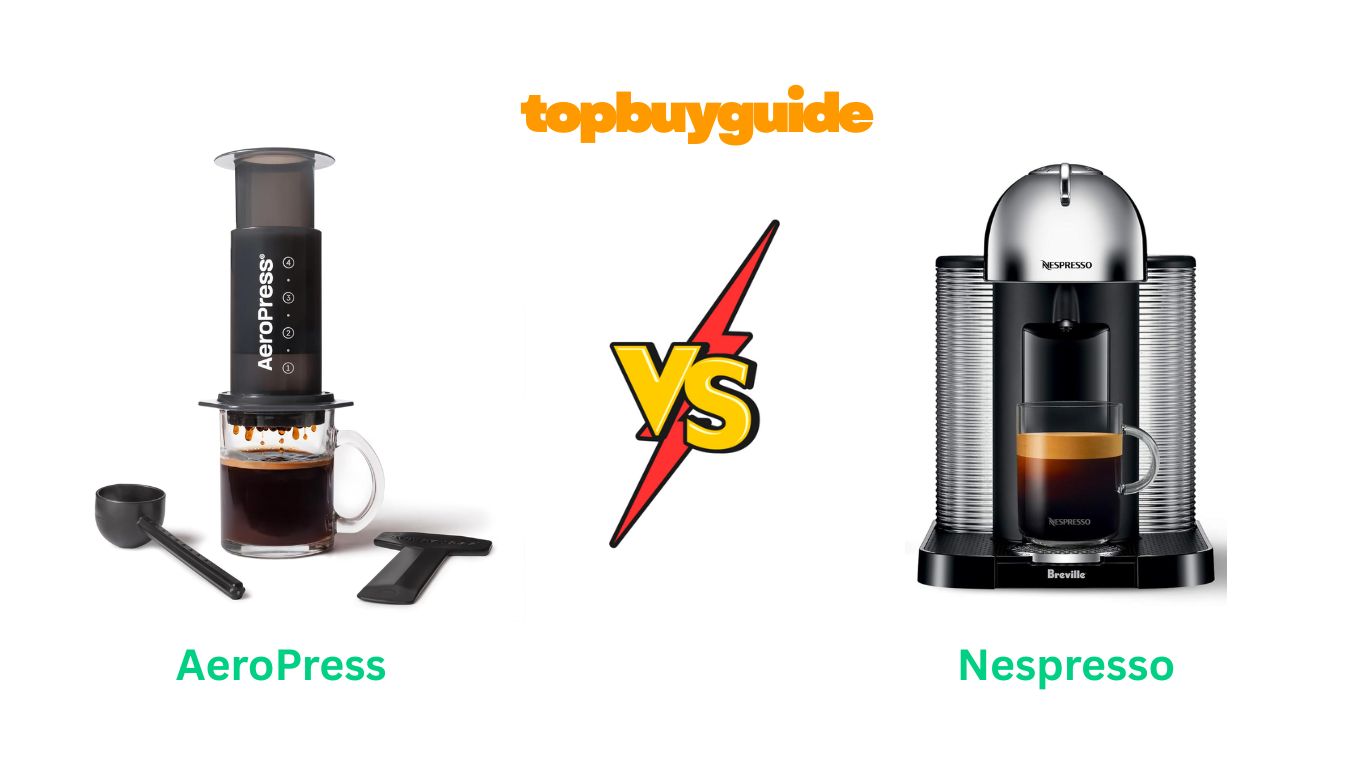
Choosing the right coffee system transforms your daily routine and budget. The AeroPress Original stands out as my top recommendation for most coffee enthusiasts. At $30-40 versus Nespresso’s $150-600 investment, the AeroPress delivers unmatched value. You control every brewing variable creating personalized espresso-style coffee from fresh grounds. While Nespresso offers one-touch convenience with automated perfection, the AeroPress’s minimal ongoing costs, superior customization, and travel-friendly design make it the smarter long-term investment for quality-focused coffee lovers.
Why Do I Recommend The AeroPress Original?
The AeroPress Original outperforms Nespresso machines with superior value, flexibility, and coffee quality that serious coffee enthusiasts demand:
- Dramatically Lower Ongoing Costs: The AeroPress requires only ground coffee and 2-cent paper filters for operation. In contrast, Nespresso pods cost 70¢-$1.50 each adding $255-$550 annually for daily drinkers. Over five years, pod costs alone exceed $1,275 compared to minimal AeroPress expenses.
- Complete Brewing Control: Adjust water temperature, grind size, brew time, and coffee-to-water ratios for unlimited customization. Nespresso’s barcode-controlled automation removes all manual adjustments, locking you into predetermined extraction parameters regardless of personal preferences.
- Fresher Coffee Quality: Use freshly roasted beans ground immediately before brewing for maximum flavor. Nespresso’s pre-ground capsule coffee oxidizes over time despite sealed packaging, resulting in noticeably less vibrant taste compared to fresh-ground alternatives.
- Exceptional Portability: Weighing just 5 ounces and measuring 4 inches tall, the AeroPress fits anywhere without requiring electricity. Nespresso machines weigh 5-15 pounds, demand counter space, and need electrical outlets making travel impractical.
- Unlimited Coffee Variety: Purchase beans from any roaster worldwide exploring endless flavor profiles and origins. Nespresso restricts you to their proprietary capsule ecosystem limiting variety despite offering multiple blends. Third-party Vertuo pods remain scarce.
- Minimal Environmental Impact: The AeroPress generates only compostable paper filters and coffee grounds as waste. Nespresso produces 3-5 grams of aluminum per capsule requiring specialized recycling programs. Even with recycling, pod systems create significantly more waste.
- Faster Cleanup Process: Simply press out the compact coffee puck and rinse the chamber in 15 seconds. Nespresso machines require emptying drip trays, removing used capsule containers, and monthly descaling cycles consuming considerably more time.
- Proven Durability: The AeroPress’s simple construction with few moving parts lasts 10+ years with minimal maintenance. Nespresso machines contain complex pump systems, heating elements, and electronics failing more frequently requiring repairs or replacement.
Side By Side Comparison Chart: AeroPress vs Nespresso
| Feature | AeroPress Original | Nespresso Vertuo |
| Brewing Method | Manual immersion + pressure | Automated Centrifusion (7,000 RPM) |
| Initial Cost | $30-40 | $150-600 |
| Per-Cup Cost | $0.15-0.40 (coffee + filter) | $0.70-1.50 (pod only) |
| Coffee Type | Any ground coffee | Proprietary Vertuo pods only |
| Freshness Control | Grind-to-brew in seconds | Pre-ground capsules |
| Customization | Complete (temp, time, ratio) | None (barcode controlled) |
| Brewing Capacity | 8 oz (up to 10 oz diluted) | 1.35-14 oz (5 sizes) |
| Brew Time | 1-3 minutes total | 30-60 seconds |
| Crema Production | No true crema | Thick aerated crema |
| Power Required | None (manual) | 110V electricity |
| Portability | Extremely portable (5 oz) | Counter-mounted (5-15 lbs) |
| Water Heating | External kettle needed | Built-in heating element |
| Dimensions | 4″ tall x 4″ diameter | 9-12″ x 12-15″ x 10-12″ |
| Cleanup Time | 15 seconds | 30-60 seconds + maintenance |
| Environmental Impact | Minimal (compostable) | Aluminum capsules (recyclable) |
| Learning Curve | Moderate (technique-dependent) | None (one-button) |
| Consistency | Variable (skill-based) | Perfectly consistent |
| Filter Options | Paper or metal reusable | Built-in capsule filter |
| Maintenance | Rinse after use | Descaling every 300 brews |
| Lifespan | 10+ years | 3-7 years |
| Warranty | 1 year | 1-2 years |
What Common Features Can AeroPress vs Nespresso Do?
Single-Serve Coffee Brewing
Both systems excel at preparing individual servings of concentrated coffee ideal for daily consumption. The AeroPress brews 8 ounces of espresso-style coffee in a single pressing using manual pressure. This concentrated output dilutes to 10-12 ounces for americano-style drinks. The Nespresso Vertuo similarly creates single servings ranging from 1.35-ounce espresso shots to 14-ounce Alto cups. Both eliminate waste associated with full-pot brewing when only one cup is needed. Neither system accommodates large-batch preparation efficiently making them best suited for individual drinkers.
Espresso-Style Coffee Production
Each brewing method creates concentrated coffee resembling espresso’s intensity though neither produces authentic espresso technically. The AeroPress uses immersion brewing combined with gentle air pressure forcing water through grounds. This results in full-bodied, low-acidity coffee comparable to espresso concentration. The Nespresso employs Centrifusion technology spinning capsules at 7,000 RPM while injecting hot water. The centrifugal extraction creates espresso-like intensity with signature crema topping. Both outputs work excellently as bases for lattes, cappuccinos, and other milk-based drinks.
Fast Brewing Times
Both coffee makers deliver finished drinks significantly faster than traditional brewing methods. The AeroPress completes brewing in 1-3 minutes including water heating and cleanup. Active brewing time where pressure is applied lasts just 30 seconds. The Nespresso brews even faster with 30-60 second extraction times depending on cup size. Its built-in heating element eliminates separate water boiling. Both systems serve busy individuals needing quality coffee quickly without lengthy preparation or waiting periods.
Compact Counter Footprint
Each system occupies minimal counter space compared to traditional espresso machines or drip coffee makers. The AeroPress measures just 4 inches tall by 4 inches in diameter storing easily in cabinets. When not in use, it requires no permanent counter position. The Nespresso Vertuo occupies approximately 9-12 inches width, 12-15 inches depth, and 10-12 inches height. While larger than AeroPress, it remains significantly smaller than commercial espresso machines. Both suit small kitchens and compact living spaces.
Simple Operation Process
Both brewing systems emphasize user-friendly operation requiring minimal technical knowledge. The AeroPress involves straightforward steps: add coffee, pour water, stir, press plunger. The entire process takes minutes to learn. The Nespresso simplifies even further with one-button operation. Insert capsule, press button, collect finished coffee. The machine automatically adjusts parameters via barcode reading. Both eliminate complex grinding, tamping, and pressure management associated with traditional espresso machines.
Reduced Acidity Levels
Each brewing method produces less acidic coffee compared to traditional drip brewing techniques. The AeroPress’s short immersion time and lower water temperature extract fewer bitter compounds. The paper filter removes additional oils reducing acidity further. The Nespresso’s Centrifusion extraction similarly minimizes bitter flavors through controlled temperature and precise timing. Both systems create smooth, gentle coffee easier on sensitive stomachs. Users prone to acid reflux often prefer these methods.
Consistent Coffee Quality
Both systems deliver reliable, repeatable results with proper technique. The AeroPress produces consistent coffee once users establish their preferred recipe and method. Variables remain controllable ensuring replicability across brewing sessions. The Nespresso guarantees perfect consistency through automated barcode-controlled extraction. Every capsule brews identically removing human error completely. Both eliminate the inconsistency plaguing manual brewing methods when technique varies day-to-day.
Minimal Counter Clutter
Each coffee maker maintains clean, organized brewing spaces without extensive equipment proliferation. The AeroPress requires only itself, filters, and a coffee scoop as permanent equipment. Everything stores compactly in drawers when not needed. The Nespresso similarly contains all brewing components within its compact housing. No separate grinders, tampers, or distribution tools necessary. Both systems appeal to minimalists wanting quality coffee without equipment sprawl.
Common Features of AeroPress vs Nespresso
| Feature | AeroPress Original | Nespresso Vertuo |
| Single-Serve Focus | ✓ 1 cup per brew | ✓ 1 cup per brew |
| Espresso-Style Coffee | ✓ Concentrated output | ✓ Espresso to coffee |
| Fast Brewing | ✓ 1-3 minutes | ✓ 30-60 seconds |
| Compact Design | ✓ 4″ tall | ✓ Countertop compact |
| Simple Operation | ✓ Easy manual process | ✓ One-button automation |
| Consistent Results | ✓ With technique | ✓ Automated consistency |
| Low Acidity Coffee | ✓ Gentle extraction | ✓ Controlled brewing |
| BPA-Free Materials | ✓ Polypropylene | ✓ Food-safe plastics |
| Easy Cleanup | ✓ Quick rinse | ✓ Auto capsule ejection |
| Versatile Drinks | ✓ Coffee variations | ✓ 5 cup sizes |
| Quiet Operation | ✓ Silent manual | ✓ Moderate noise |
| No Expertise Required | ✓ Beginner-friendly | ✓ Foolproof automation |
| Travel-Suitable | ✓ Extremely portable | ✓ Not portable |
| Minimal Maintenance | ✓ Rinse only | ✓ Monthly descaling |
A Detailed Comparison Of the AeroPress vs Nespresso
Brewing Technology and Method
The AeroPress employs immersion brewing combined with gentle air pressure extraction creating unique coffee characteristics. Ground coffee steeps in hot water for 10 seconds to 2 minutes depending on desired strength. The plunger then forces water through grounds and a microfilter using approximately 15 pounds of manual pressure. This process extracts coffee oils and flavors while filtering sediment completely. The Nespresso Vertuo uses patented Centrifusion technology spinning capsules at up to 7,000 RPM while injecting water. Centrifugal force distributes water evenly throughout grounds ensuring complete saturation. The spinning motion creates thick, aerated crema characteristic of Nespresso coffee.
Initial Investment and Setup Costs
The AeroPress retails for $30-40 as a complete kit including chamber, plunger, filter cap, stirrer, scoop, and 350 paper filters. No additional equipment is mandatory though a kettle for heating water helps. Total startup investment remains under $50 with quality coffee. The Nespresso Vertuo line ranges from $150 for basic models to $600 for premium machines with milk frothers. The machine price represents just initial investment. Required water filters, descaling solution, and first capsule supply add $50-100 to setup costs. Total entry investment approaches $200-700 depending on model selection.
Ongoing Per-Cup Costs
The AeroPress’s operational costs include only coffee and filters totaling 15-40 cents per cup. Quality specialty coffee costs $12-18 per pound yielding approximately 30 cups at 15 grams per brew. Paper filters cost $6 per 350 or 2 cents each. Total per-cup costs rarely exceed 40 cents even with premium beans. The Nespresso’s per-cup cost is significantly higher due to proprietary capsule pricing. Original line pods cost 70¢-90¢ each while Vertuo capsules run 90¢-$1.50 depending on size. Daily coffee drinkers consuming two cups spend $550-1,100 annually on capsules alone.
Coffee Freshness and Quality Control
The AeroPress delivers maximum freshness by brewing freshly ground coffee immediately after grinding. Whole beans maintain flavor integrity until grinding releases aromatic compounds. Users control bean selection, roast date, and grinding timing ensuring peak freshness. Coffee oxidizes within minutes of grinding so immediate brewing captures full flavor potential. The Nespresso relies on pre-ground coffee sealed in aluminum capsules months before consumption. While sealing preserves freshness better than open storage, oxidation still occurs. Coffee enthusiasts notice diminished flavor complexity compared to fresh-ground alternatives. Capsule coffee rarely rivals freshly roasted and ground beans.
Customization and Brewing Control
The AeroPress provides complete control over every brewing variable enabling endless experimentation. Users adjust water temperature from 175°F-205°F affecting extraction characteristics. Brew time ranges from 30 seconds to 3 minutes altering strength and flavor profile. Coffee dose varies from 11-20 grams changing concentration. Grind size modifications from fine to coarse dramatically impact taste. The Nespresso offers zero manual control over brewing parameters. Each capsule contains a barcode dictating exact water temperature, volume, brew time, and rotation speed. Users cannot override these predetermined settings. The only variable is capsule selection.
Portability and Travel Convenience
The AeroPress weighs just 5 ounces and disassembles into nested components fitting small bags easily. It requires no electricity operating anywhere hot water is available. Backpackers, campers, and travelers favor its durability and reliability. The AeroPress survives drops, rough handling, and extreme temperatures without damage. The Nespresso weighs 5-15 pounds depending on model with non-removable components. It requires 110V electrical outlets limiting use to permanent locations. The machine’s fragile internal pumps and electronics make travel impractical. Nespresso remains strictly a stationary home or office coffee maker.
Environmental Impact and Sustainability
The AeroPress generates minimal waste producing only compostable paper filters and spent coffee grounds. Paper filters biodegrade completely in composting systems. Coffee grounds enrich soil providing nutrients. No non-biodegradable waste results from AeroPress brewing. The Nespresso creates 3-5 grams of aluminum waste per capsule consumed. While Nespresso offers recycling programs, participation requires shipping used capsules back. Many users discard capsules in regular trash. Even with recycling, the manufacturing and processing energy exceeds AeroPress’s environmental footprint significantly.
Learning Curve and Consistency
The AeroPress requires moderate technique development achieving optimal results. Beginners produce acceptable coffee immediately but improvement comes with practice. Variables like grind size, water temperature, and pressing speed affect outcomes. Users refine technique over weeks mastering preferred recipes. Results vary based on execution quality. The Nespresso eliminates learning curves entirely through complete automation. Every user achieves identical results from their first brew. The machine’s barcode system removes human error and technique variation. Perfect consistency comes guaranteed regardless of experience level.
Cleaning and Maintenance Requirements
The AeroPress cleanup takes 15 seconds pressing out the compact puck and rinsing the chamber. The rubber seal occasionally needs washing with soap but rarely requires attention. No descaling or deep cleaning necessary. The silicone gasket lasts years before needing replacement. The Nespresso requires emptying drip trays daily holding spilled liquid. Used capsule containers need regular removal holding 10-15 pods. Monthly descaling procedures take 20 minutes removing mineral buildup. The brewing head requires periodic wiping preventing coffee residue accumulation. Overall maintenance demands substantially more time.
Versatility and Drink Options
The AeroPress creates espresso-style coffee, americanos, cold brew, and filter-strength coffee through recipe variations. Users experiment with inverted methods, different ratios, and extended brew times. Online communities share thousands of recipes for diverse flavor profiles. The device accommodates any coffee bean variety or roast level. The Nespresso offers five predetermined cup sizes: espresso, double espresso, gran lungo, mug, and alto. Each capsule type brews optimally at its specified size. Users cannot significantly modify output characteristics. Drink variety depends entirely on capsule selection from Nespresso’s catalog.
Coffee Crema Production
The AeroPress cannot produce authentic espresso crema due to insufficient pressure generation. Its 1-2 bar pressure extracts oils but doesn’t emulsify them into stable foam. The resulting coffee lacks visual crema topping though flavor remains excellent. Users accepting espresso-style rather than true espresso find this acceptable. The Nespresso Vertuo produces thick, generous crema through Centrifusion’s aeration process. Capsule design traps air released during spinning creating foam resembling espresso crema. While not identical to pressure-brewed crema, the visual appeal satisfies most users. The foam adds perceived richness enhancing drinking experience.
Long-Term Durability and Lifespan
The AeroPress’s simple construction with minimal moving parts ensures exceptional longevity. Units commonly last 10-15 years with proper care. The only wear item is the rubber gasket replaceable for $5. The shatterproof polypropylene withstands drops and impacts without cracking. Many users report decade-old units functioning perfectly. The Nespresso contains complex electronics, pumps, heating elements, and solenoid valves prone to failure. Average lifespan ranges 3-7 years depending on usage intensity and maintenance quality. Repairs often cost $100-200 approaching new machine prices. Internal component failures eventually necessitate replacement.
Conclusion
After thorough analysis, the AeroPress Original delivers superior value for most coffee enthusiasts. Its $30-40 price versus Nespresso’s $150-600 investment provides immediate savings. Annual pod costs of $550-1,100 versus $50-150 for AeroPress supplies create dramatic long-term differences. Complete brewing control enables personalized coffee perfection from fresh grounds. The portable, durable design functions anywhere electricity exists. While Nespresso offers unmatched convenience and consistency, the AeroPress’s combination of affordability, customization, and quality makes it the smart choice for value-focused coffee lovers.
FAQs
Q: Can the AeroPress produce authentic espresso like Nespresso machines?
A: No, neither system produces authentic espresso technically. The AeroPress generates 1-2 bar pressure creating espresso-style concentration without true crema. Nespresso’s Centrifusion produces aerated foam resembling crema but uses different extraction methodology. Both create concentrated coffee suitable for milk drinks though purists distinguish them from traditional espresso.
Q: Which system is better for beginners with no coffee-making experience?
A: Nespresso suits absolute beginners better with foolproof one-button operation. The machine eliminates all technique requirements guaranteeing perfect results immediately. The AeroPress requires learning proper water temperature, grind size, and pressing technique. While not complex, it demands more involvement. However, AeroPress’s learning curve rewards users with superior customization capabilities.
Q: How much money will I save using AeroPress versus Nespresso long-term?
A: Substantial savings accumulate over time. Daily two-cup drinkers spend $550-1,100 annually on Nespresso pods versus $50-150 for AeroPress coffee and filters. Over five years, Nespresso costs $2,750-5,500 in pods alone. AeroPress totals $250-750 including initial purchase. The difference approaches $2,500-5,000 representing significant savings for budget-conscious consumers.
Q: Is AeroPress coffee quality comparable to Nespresso’s output?
A: Yes, many enthusiasts prefer AeroPress coffee due to fresh grinding and customization control. The AeroPress extracts more nuanced flavors from quality beans. Nespresso delivers consistent, good-quality coffee but lacks the vibrancy of fresh-ground alternatives. Preference depends on whether you prioritize convenience or ultimate coffee quality.
Q: Can I use my own coffee with Nespresso machines?
A: No, Nespresso Vertuo machines require proprietary Vertuo capsules exclusively. The barcode system prevents third-party pod usage. Original Line machines have some third-party compatible capsules but Vertuo remains locked to Nespresso’s ecosystem. The AeroPress accommodates any ground coffee from any roaster globally.
Q: Which coffee maker is easier to clean daily?
A: The AeroPress cleans faster taking 15 seconds to press out the puck and rinse. Nespresso requires emptying drip trays, removing used capsule containers, and wiping surfaces taking 30-60 seconds. However, Nespresso needs monthly 20-minute descaling procedures. Long-term, AeroPress demands less total maintenance time significantly.
Q: Is the Nespresso worth the higher price for its convenience?
A: Worth depends on priorities. If one-button convenience and zero technique requirements justify $150-600 initial investment plus $550-1,100 annual pod costs, Nespresso delivers. Budget-conscious users preferring customization and lower costs find better value in the AeroPress. Consider your available time and coffee budget.
Q: Can I make cold brew with either system?
A: Yes, the AeroPress excels at cold brew using inverted method with cold water and extended steeping times. Many recipes produce smooth, concentrated cold brew in 1-2 minutes. The Nespresso cannot make true cold brew as it only brews hot coffee. Some users brew hot then cool it but results differ from authentic cold brew.

Alex Turner is a dedicated product researcher and reviewer at TopBuyGuide.com, known for his clear, honest, and data-driven insights. He spends countless hours testing, comparing, and analyzing products to help readers make confident and informed buying decisions.