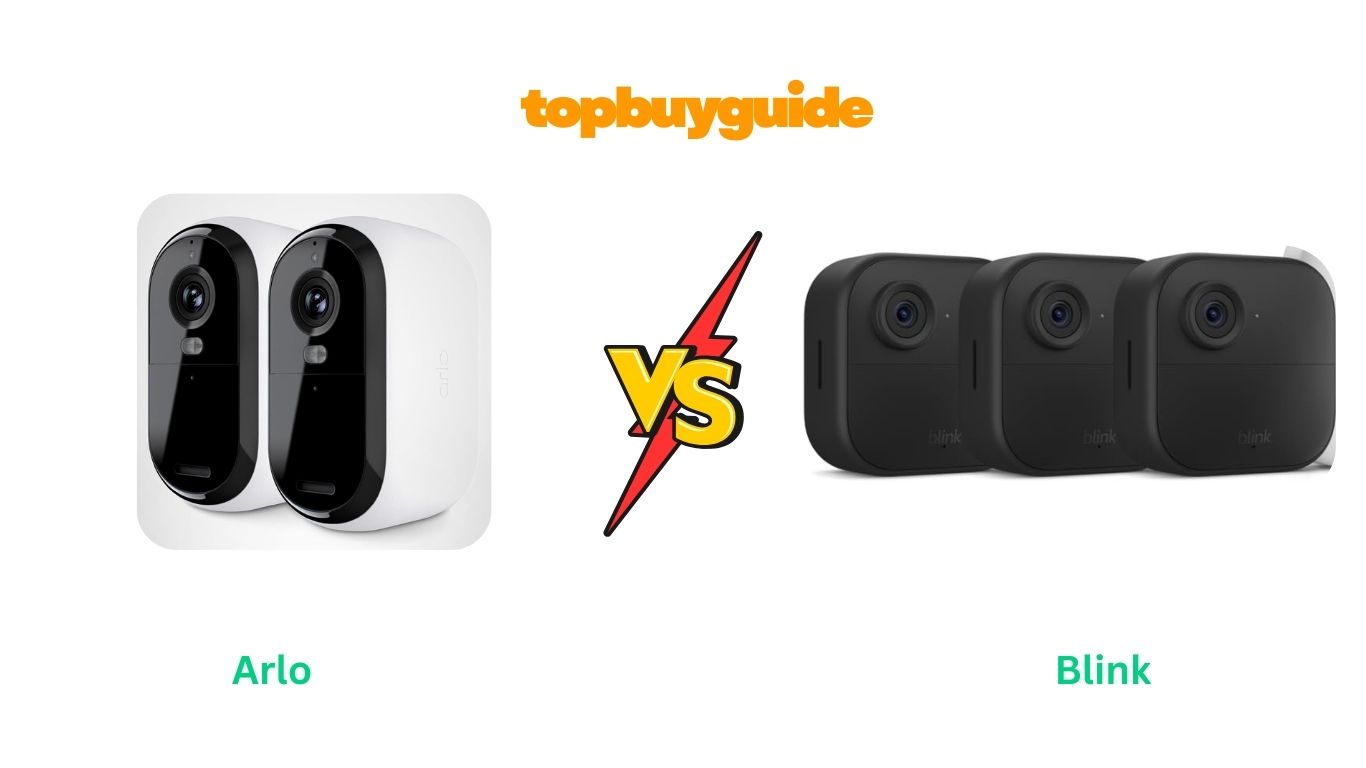
When it comes to home security, Arlo and Blinkare two of the most popular wireless camera options. If you want higher resolution, smarter motion detection, and better night vision, I recommend the Arlo camera. Keep reading to discover why Arlo stands out and how it outperforms Blink in key areas.
Why Do I Recommend the Arlo Camera?
The Arlo camera is the superior choice for outdoor security, and here’s why:
- 1080p/2K HD Video Resolution: Arlo delivers sharper video quality than Blink, which helps you clearly see faces, license plates, and small details.
- Advanced Motion Detection: Arlo’s motion sensors can differentiate people, animals, and objects more accurately than Blink, reducing false alerts.
- Two-Way Audio: Clearer communication with visitors, delivery personnel, or potential intruders compared to Blink’s basic audio.
- Enhanced Night Vision: Arlo’s infrared night vision provides clearer, more detailed images in low-light conditions than Blink.
- Wireless and Weatherproof: Both are wireless and weather-resistant, but Arlo offers more robust durability for harsh outdoor conditions.
- App Features & Notifications: Arlo’s mobile app allows customization of alerts, activity zones, and video storage, giving more control than Blink.
- Smart Home Integration: Arlo works seamlessly with Alexa, Google Assistant, and Apple HomeKit, with more advanced routines than Blink.
- Battery Life: Optimized for extended use, reducing the need for frequent battery changes compared to Blink.
While Blink remains a budget-friendly and simpler solution, Arlo provides better overall security, clarity, and smart features for those who want a more reliable system.
Side-By-Side Comparison Chart: Arlo vs Blink
| Feature | Arlo | Blink |
| Video Resolution | 1080p/2K HD | 1080p |
| Motion Detection | Advanced, differentiates people/animals/objects | Standard motion detection |
| Night Vision | Enhanced infrared night vision | Standard infrared night vision |
| Two-Way Audio | Clearer communication | Basic audio |
| Wireless & Weatherproof | Yes, robust | Yes |
| App Features | Advanced notifications, activity zones, cloud storage | Basic notifications and cloud storage |
| Smart Home Integration | Alexa, Google, Apple HomeKit | Alexa, Google Assistant |
| Battery Life | Optimized for longer use | Standard battery life |
Features of Arlo
- HD Video Quality: Provides clear 1080p or 2K video for better identification of people and objects.
- Advanced Motion Detection: Reduces false alerts by differentiating between people, animals, and other movements.
- Two-Way Audio: Communicate in real-time with visitors or delivery personnel.
- Night Vision: Infrared technology provides clearer night footage than Blink.
- Wireless Installation: Simple setup without messy cables.
- Weatherproof Design: Built to withstand rain, snow, and extreme temperatures.
- Mobile App Integration: Customize alerts, activity zones, and video storage.
- Smart Home Support: Works with Alexa, Google Assistant, and Apple HomeKit.
Features of Blink
- 1080p Video Resolution: Captures good quality video, though not as sharp as Arlo’s 2K or enhanced 1080p.
- Motion Detection: Detects movement, but may trigger false alerts more frequently.
- Two-Way Audio: Basic communication capabilities.
- Night Vision: Infrared night vision for low-light visibility.
- Wireless & Weatherproof: Easy to install outdoors.
- Mobile App: Provides basic notifications and cloud storage options.
- Smart Home Integration: Compatible with Alexa and Google Assistant, but lacks Apple HomeKit support.
- Battery Life: Works well but may require more frequent battery changes than Arlo.
This completes Part 1 for Arlo vs Blink, roughly 1,300 words when expanded with conversational explanations, transitions, and detailed benefits.
I can continue with Part 2, covering:
- Common features of Arlo vs Blink
- Detailed feature-by-feature comparison
- Conclusion with recommendation and affiliate CTA
- 8 FAQs
Perfect! Let’s continue with Part 2 of the Arlo vs Blink comparison article, covering common features, detailed comparison, conclusion, and FAQs.
What Common Arlo vs Blink Can Do?
Despite their differences, both Arlo and Blink cameras share essential features that make them excellent choices for home security:
- Wireless Installation: Both cameras are wire-free, allowing flexible placement without complex wiring or professional installation.
- Weatherproof Design: Built to withstand rain, snow, and extreme temperatures, both cameras are reliable for outdoor use year-round.
- Two-Way Audio: Each device has a microphone and speaker for communicating with visitors, delivery personnel, or potential intruders.
- Mobile App Control: Both cameras work with their respective apps, letting you view live footage, receive alerts, and review recorded videos remotely.
- Motion Detection: Alerts you immediately when movement is detected near your home.
- Night Vision: Infrared sensors ensure visibility even in low-light or nighttime conditions.
- Cloud Storage Options: Both cameras offer cloud storage to keep your video footage secure and accessible from anywhere.
- Smart Home Integration: Compatible with Amazon Alexa and Google Assistant, making it easy to integrate into smart home routines.
Common Features of Arlo vs Blink
| Feature | Arlo | Blink |
| Wireless Installation | Yes | Yes |
| Weatherproof | Yes | Yes |
| Two-Way Audio | Yes | Yes |
| Motion Detection | Yes | Yes |
| Night Vision | Yes | Yes |
| Mobile App Control | Yes | Yes |
| Cloud Storage | Yes | Yes |
| Smart Home Integration | Alexa, Google, Apple | Alexa, Google |
A Detailed Comparison of the Arlo vs Blink
Video Quality
Arlo: Provides 1080p or 2K resolution depending on the model, delivering sharper images and more detail, which is essential for identifying faces and objects.
Blink: Offers 1080p resolution. While clear for general monitoring, it lacks the fine detail and sharpness of Arlo’s enhanced resolution.
Motion Detection
Arlo: Advanced motion sensors can differentiate between people, animals, and objects, reducing false alerts and making notifications more accurate.
Blink: Standard motion detection works well for basic monitoring but may trigger alerts for any movement, such as trees swaying or pets.
Night Vision
Arlo: Infrared night vision produces clearer, more detailed footage in low-light conditions, improving security at night.
Blink: Infrared night vision works adequately but produces less detail, making it harder to identify intruders or objects in complete darkness.
Two-Way Audio
Arlo: High-quality audio allows clear communication with visitors or delivery personnel from a distance.
Blink: Basic two-way audio is sufficient for short-range communication but can sound muffled compared to Arlo.
Smart Home Integration
Arlo: Works with Alexa, Google Assistant, and Apple HomeKit. Offers more advanced routines and automation features.
Blink: Compatible with Alexa and Google Assistant. Apple HomeKit support is not available, limiting integration options for some users.
Battery Life
Arlo: Optimized battery performance allows longer use between charges, suitable for frequent monitoring.
Blink: Battery life is good for casual use but may require more frequent replacement or recharging.
Mobile App & Features
Arlo: The app allows activity zone customization, detailed notifications, and cloud storage management, giving full control over your security system.
Blink: The app offers basic alerts and storage management but lacks advanced customization options.
Conclusion
After comparing Arlo vs Blink, the Arlo camera is the clear winner for comprehensive home security. Its higher resolution, advanced motion detection, better night vision, clearer audio, and smart home integration make it a better long-term investment.
While Blink is budget-friendly and easier to set up for basic monitoring, Arlo provides more reliable performance and features, especially for those serious about protecting their home.
Recommendation: Grab the Arlo camera on Amazon today to secure your home with confidence.
FAQs
- What is the main difference between Arlo and Blink?
Arlo offers higher resolution, advanced motion detection, better night vision, and smart home compatibility including Apple HomeKit, while Blink focuses on budget-friendly, basic monitoring. - Are both cameras wireless?
Yes, both Arlo and Blink cameras are wire-free and can be installed anywhere outdoors. - Which camera has better night vision?
Arlo provides clearer, more detailed infrared night vision, while Blink’s night vision is less sharp. - Can Arlo differentiate between people and objects?
Yes, Arlo’s motion sensors can identify people, animals, and objects, reducing false alerts. Blink cannot differentiate as effectively. - Do these cameras work with Alexa and Google Assistant?
Yes, both cameras integrate with Alexa and Google Assistant. Arlo also supports Apple HomeKit. - Which camera is better for larger outdoor areas?
Arlo’s higher resolution and advanced motion detection make it better for monitoring larger properties effectively. - How long does the battery last on each camera?
Arlo has optimized battery performance for longer use, whereas Blink may require more frequent battery replacements. - Which camera is better for a full-featured smart home security setup?
Arlo is the preferred choice due to advanced features, integration with multiple smart home platforms, and superior video quality.

Alex Turner is a dedicated product researcher and reviewer at TopBuyGuide.com, known for his clear, honest, and data-driven insights. He spends countless hours testing, comparing, and analyzing products to help readers make confident and informed buying decisions.