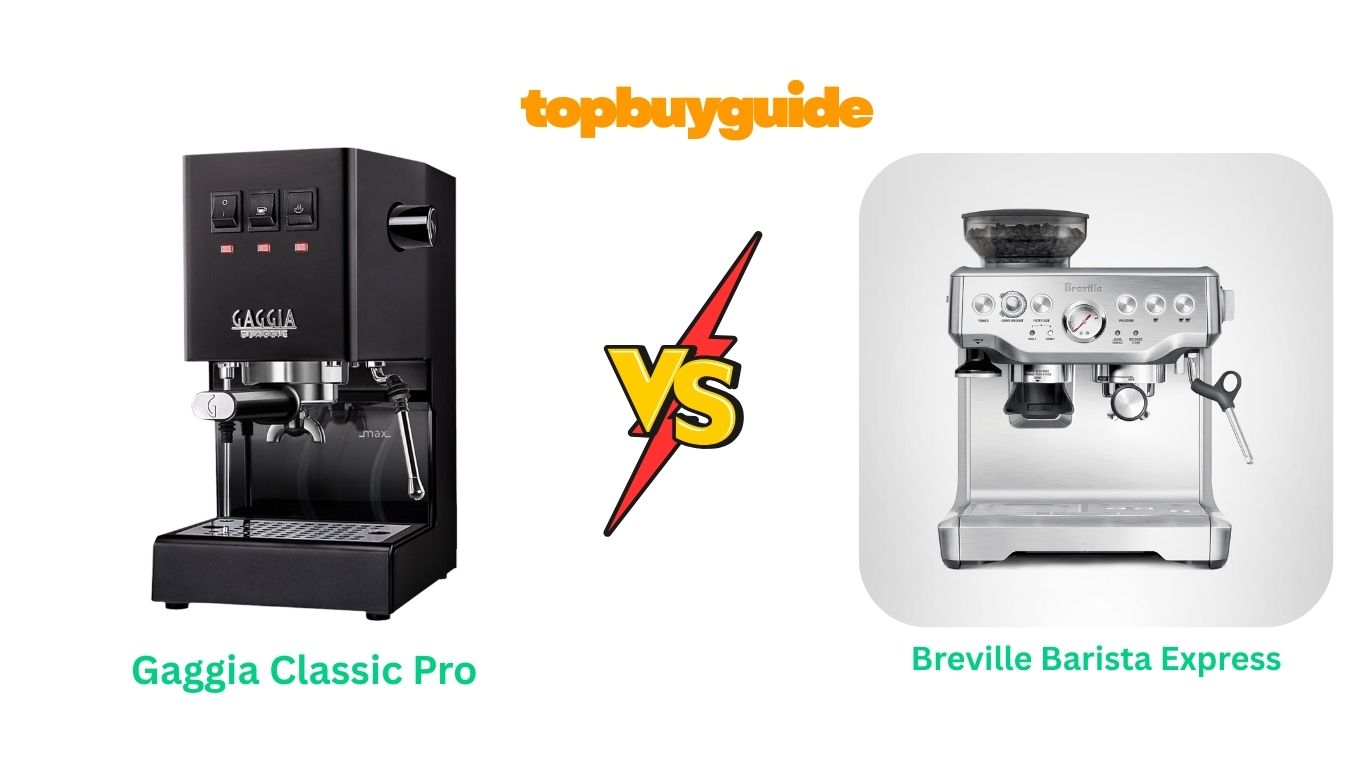
Choosing between the Gaggia Classic Pro and the Breville Barista Express can be tough. Both are top entry-level machines. However, for those seeking cafe-quality espresso and long-term durability, I recommend the Gaggia Classic Pro. Its commercial-grade components and Italian-made quality offer an unmatched experience for aspiring home baristas. It provides a solid foundation for you to grow your espresso-making skills over time, making it a worthwhile investment.
Why Do I Recommend The Gaggia Classic Pro?
While the Breville Barista Express is an excellent all-in-one machine, the Gaggia Classic Pro stands out for those serious about the craft of espresso. Here are the key reasons I recommend it:
- Commercial-Grade Portafilter: The Gaggia Classic Pro features a heavy-duty, 58mm commercial-grade portafilter made of stainless steel. This is the same size used in professional cafes. This design provides superior temperature stability during extraction. In contrast, the Breville Barista Express uses a smaller, 54mm portafilter, which can be limiting as you advance your skills.
- Superior Build Quality: The Gaggia Classic Pro boasts a rugged, solid steel housing and is made in Italy, a testament to its durability and longevity. Many users report these machines lasting for decades. The Breville Barista Express, while well-designed, incorporates more plastic components, which may not offer the same level of long-term durability according to some user reviews.
- Powerful Steam Wand: For milk-based drinks, the Gaggia Classic Pro is equipped with a commercial-style steam wand. This allows for precise control, enabling you to create the velvety microfoam needed for latte art. The steam wand on the Breville Barista Express is also capable but is often considered less powerful by experienced users.
- Three-Way Solenoid Valve: A feature typically found on high-end commercial machines, the Gaggia Classic Pro includes a three-way solenoid valve. This valve releases pressure from the portafilter after brewing, resulting in a dry, easy-to-knock-out puck of coffee grounds. This makes cleanup significantly quicker and cleaner compared to the wetter pucks often produced by the Breville Barista Express.
- Simple, Focused Design: The Gaggia Classic Pro features simple rocker switches for power, brewing, and steaming. This straightforward interface is perfect for learning the fundamentals of espresso making without overwhelming features. Conversely, the Breville Barista Express has more buttons and dials, which can feel less intuitive for a true beginner.
- Highly Modifiable: The Gaggia Classic Pro has a massive online community dedicated to modifications. You can easily add a PID for temperature control, adjust pressure, and upgrade various parts. This makes it a machine that can grow with you. The Breville Barista Express is less customizable, limiting your ability to fine-tune its performance.
- Authentic Espresso Experience: Using the Gaggia Classic Pro feels like operating a genuine cafe machine. It requires you to learn and master the process, which is incredibly rewarding. While the Breville Barista Express is more convenient with its integrated grinder, it automates parts of the process, which can detach you from the hands-on craft of espresso.
- Proven Longevity: The Gaggia Classic Pro has a long-standing reputation for reliability. Its simple mechanics and high-quality components mean it’s built to last. User reviews frequently highlight the durability of Gaggia machines over many years, whereas the all-in-one nature of the Breville can lead to more potential points of failure over time.
Side By Side Comparison Chart (Gaggia Classic Pro vs Breville Barista Express)
| Feature | Gaggia Classic Pro | Breville Barista Express |
| Grinder | Not Included | Integrated Conical Burr Grinder |
| Portafilter Size | 58mm Commercial | 54mm Proprietary |
| Build Materials | Solid Steel Housing | Stainless Steel & Plastic |
| Pressure Gauge | Not Included | Included |
| PID Temperature Control | Not Included (Modifiable) | Included |
| Steam Wand | Commercial Style | Manual Steam Wand |
| 3-Way Solenoid Valve | Yes | No |
| User Interface | Rocker Switches | Buttons and Dials |
| Country of Origin | Italy | Designed in Australia |
| Best For | Aspiring baristas, customization | Beginners seeking convenience |
Features
Gaggia Classic Pro
The Gaggia Classic Pro is a semi-automatic espresso machine renowned for its robust build and professional-grade components. Made in Italy, it features a solid steel housing that ensures durability. It comes equipped with a commercial-sized 58mm stainless steel portafilter and a commercial steam wand, giving you the tools to pull café-quality shots and create perfect microfoam for lattes. The machine includes a three-way solenoid valve for dry pucks and easy cleanup. Its interface consists of simple, intuitive rocker switches. While it lacks a built-in grinder and a pressure gauge, its design is focused on the core elements of great espresso extraction, including a rapid heating boiler and 9-bar extraction pressure. Its high modifiability makes it a favorite among espresso enthusiasts who enjoy upgrading their equipment over time.
Breville Barista Express
The Breville Barista Express is an all-in-one semi-automatic espresso machine designed for home use. It features a built-in conical burr grinder that doses freshly ground coffee directly into the portafilter. The machine includes digital temperature control (PID) to ensure optimal water temperature and a pressure gauge to help you monitor extraction. Its 54mm portafilter and manual steam wand allow you to craft espresso and milk-based drinks with control. The Barista Express also offers programmable shot volumes and a hot water outlet for Americanos. With its brushed stainless steel finish and comprehensive set of included accessories, it provides a convenient, complete package for beginners looking to make specialty coffee at home with minimal extra equipment.
What Common (Gaggia Classic Pro vs Breville Barista Express) Can Do?
Both the Gaggia Classic Pro and the Breville Barista Express are excellent semi-automatic espresso machines designed to bring the cafe experience into your home. They empower you to move beyond pod-based coffee and start crafting your own specialty drinks. You can pull single or double shots of espresso, using your own freshly ground beans to achieve rich, complex flavors that pre-ground coffee simply can’t match.
Each machine is equipped with a powerful steam wand. This allows you to texture milk to create the smooth, velvety microfoam necessary for making classic drinks like lattes and cappuccinos. With a bit of practice, you can even start pouring your own latte art. Both machines give you hands-on control over the brewing process, from tamping the coffee grounds to timing the extraction, offering a rewarding and engaging experience for any coffee lover.
Common Features of (Gaggia Classic Pro vs Breville Barista Express)
| Feature | Gaggia Classic Pro | Breville Barista Express |
| Machine Type | Semi-Automatic Espresso Machine | Semi-Automatic Espresso Machine |
| Steam Wand | Yes, Manual | Yes, Manual |
| Housing Material | Stainless Steel | Stainless Steel |
| Hot Water Dispenser | Yes (via steam wand) | Yes, dedicated spout |
| Cup Warmer | Yes, Passive | Yes, Passive |
| Removable Water Tank | Yes | Yes |
| Included Filter Baskets | Single & Double (Pressurized & Commercial) | Single & Double (Single & Dual Wall) |
A Detailed Comparison Of the (Gaggia Classic Pro vs Breville Barista Express)
Built-in Grinder
The most significant difference is the built-in grinder. The Breville Barista Express features an integrated conical burr grinder with 16 settings. This provides incredible convenience, allowing you to go from whole beans to espresso in under a minute without needing a separate appliance. This all-in-one design saves counter space and simplifies the workflow for beginners.
In contrast, the Gaggia Classic Pro does not include a grinder. This is intentional, as it’s designed for users who want to choose their own high-quality burr grinder. While this means an additional purchase is necessary, it offers greater control and the ability to achieve a more consistent and fine grind, which is crucial for perfect espresso. This separation also means that if one component fails, you don’t have to replace the entire unit.
Portafilter and Extraction
The Gaggia Classic Pro uses a 58mm commercial-grade portafilter, the standard size in professional cafes. This heavy, stainless steel component retains heat well, contributing to more stable and consistent extractions. It gives you the feel of a true barista and opens the door to a wide range of professional accessories like tampers and baskets.
The Breville Barista Express comes with a smaller, 54mm portafilter. While it performs well and is suitable for home use, it’s not a standard commercial size. This limits your options for aftermarket accessories. Breville includes both single-wall (for fresh beans) and dual-wall (for pre-ground coffee) baskets, making it forgiving for beginners, while the Gaggia offers both pressurized and commercial baskets.
Ease of Use and Learning Curve
For a complete beginner, the Breville Barista Express is arguably easier to use out of the box. The built-in grinder, pressure gauge, and programmable shot buttons guide the user through the process. The pressure gauge provides instant visual feedback, helping you dial in your grind and tamp pressure.
The Gaggia Classic Pro has a steeper learning curve but offers a more rewarding experience in the long run. Its simple three-switch operation forces you to learn the fundamentals of espresso making by feel, timing, and observation. It lacks a pressure gauge, so you learn to judge your shot by the flow and color of the espresso, a classic barista skill.
Build Quality and Durability
The Gaggia Classic Pro is built like a tank. Its solid steel housing and Italian craftsmanship are evident in its weight and feel. It has a long-standing reputation for durability, with simple internal mechanics that are easy to service and have stood the test of time. Many users report their Gaggia machines lasting for over a decade.
The Breville Barista Express also features a stylish brushed stainless steel exterior, but it incorporates more plastic in its construction. While it is a well-made machine, its all-in-one complexity with more electronics and a built-in grinder means there are more potential points of failure. User reviews suggest that its lifespan may not be as long as the Gaggia’s.
Steaming Milk
Both machines feature powerful manual steam wands capable of producing microfoam for latte art. The Gaggia Classic Pro’s commercial-style steam wand is praised for its power and ability to create silky smooth milk quickly, though it requires some practice to master.
The Breville Barista Express steam wand is also very capable and swivels 360 degrees, making it easy to position your milk jug. It operates on a thermocoil system, which heats up quickly. While it may be slightly less powerful than the Gaggia’s, it is still more than sufficient for creating excellent milk texture for lattes and cappuccinos at home.
Conclusion
For beginners who value convenience and an all-in-one solution, the Breville Barista Express is a fantastic choice. However, if you are passionate about coffee and want a machine that will challenge you, grow with you, and last for years, the Gaggia Classic Pro is the clear winner. Its commercial-grade components, superior build quality, and unmatched modifiability provide a true barista experience and a foundation for mastering the art of espresso. It is an investment that pays off in both quality and skill.
FAQs
- Which machine is better for a complete beginner?
The Breville Barista Express is generally better for complete beginners. Its built-in grinder, pressure gauge, and more automated features provide a gentler learning curve and a more convenient all-in-one package to get started right away. - Do I need to buy a separate grinder for the Gaggia Classic Pro?
Yes. The Gaggia Classic Pro does not have a built-in grinder. You will need to purchase a separate burr grinder capable of producing a fine, consistent grind suitable for espresso. This adds to the initial cost but offers better quality and control. - Can I use pre-ground coffee with these machines?
Yes, both machines come with special filter baskets for pre-ground coffee. The Gaggia includes a pressurized basket, and the Breville includes dual-wall baskets. These help create artificial pressure to produce crema even if the grind isn’t perfect. - What is a PID, and why is it important?
A PID (Proportional-Integral-Derivative) controller is a device that provides precise digital temperature control. The Breville Barista Express has one built-in, ensuring stable water temperature for consistent shots. The Gaggia Classic Pro does not, but it is a very common and popular modification added by users. - How important is the 58mm portafilter on the Gaggia?
The 58mm portafilter is the commercial standard. This means you have access to a vast market of high-quality aftermarket accessories like tampers, baskets, and distribution tools. The Breville’s 54mm size is proprietary, so your accessory options are more limited. - Which machine makes better-tasting espresso?
With the right skills and a quality grinder, the Gaggia Classic Pro has a higher potential to produce better-tasting espresso due to its commercial-grade portafilter and robust build. However, the Breville Barista Express can make excellent espresso more consistently for beginners thanks to its PID and pressure gauge. - How long do these machines typically last?
The Gaggia Classic Pro is known for its incredible durability, with many users reporting 10+ years of use with proper maintenance. The Breville Barista Express, being a more complex all-in-one machine, generally has a shorter lifespan, with users often reporting issues after 3-5 years. - Is the three-way solenoid valve on the Gaggia a big deal?
Yes, it’s a significant quality-of-life feature. It relieves water pressure after brewing, leaving a dry, solid puck of coffee grounds that is easy to knock out. This makes cleanup much neater and faster compared to the often soupy pucks from machines without this feature.

Alex Turner is a dedicated product researcher and reviewer at TopBuyGuide.com, known for his clear, honest, and data-driven insights. He spends countless hours testing, comparing, and analyzing products to help readers make confident and informed buying decisions.