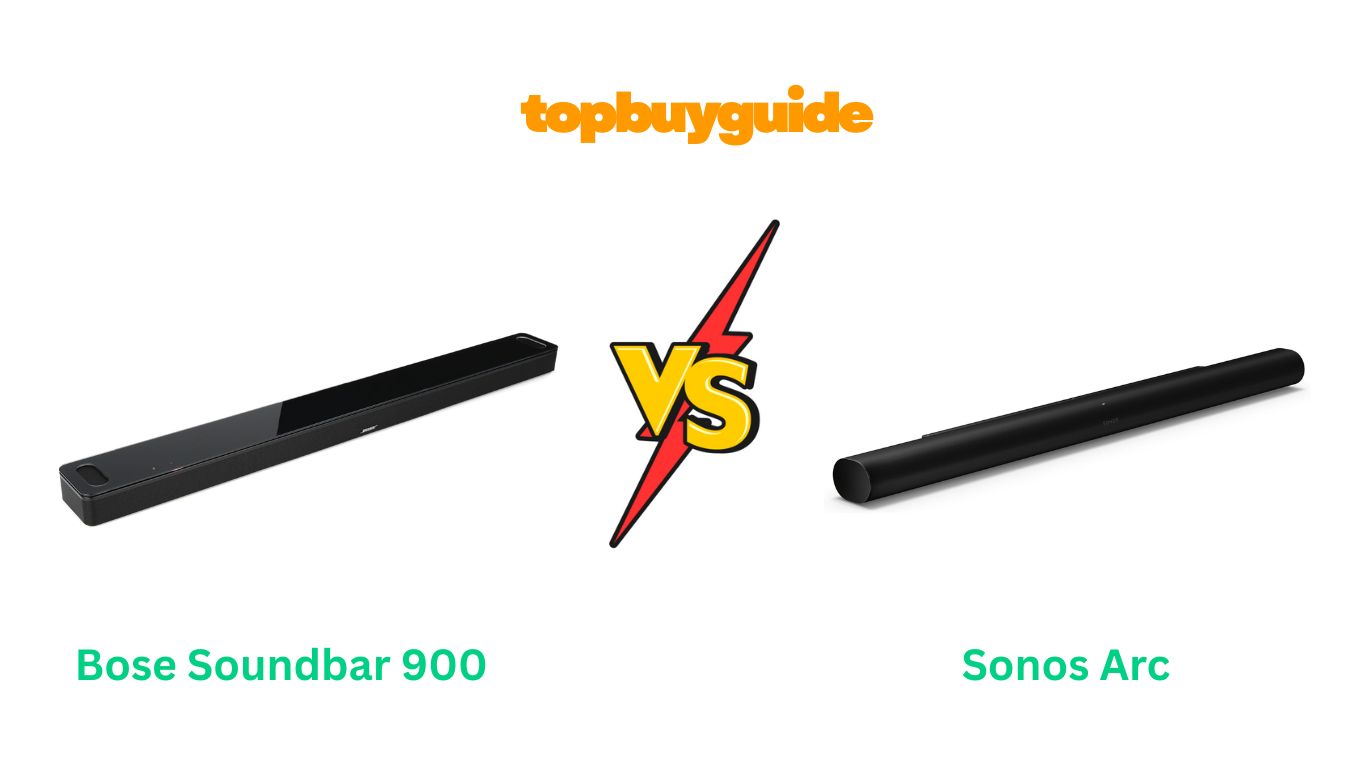
Choosing the right soundbar can transform your home theater experience. Both the Bose 900 and Sonos Arc are top contenders, but they excel in different areas. If you’re looking for a wider, more enveloping soundstage straight out of the box, the Bose 900 Soundbar is my top recommendation. Its unique driver placement and ADAPTiQ room calibration create an impressively immersive experience, especially for movies. Let’s dive deeper to see which is best for you.
Why Do I Recommend The Bose Smart Soundbar 900?
- Exceptional Sound Imaging: The Bose 900 Soundbar features exclusive Bose technologies like PhaseGuide, which works with its upfiring dipole speakers to place sound in areas where there are no physical speakers. This creates a remarkably spacious and immersive Dolby Atmos experience that feels wider than what the Sonos Arc offers on its own.
- Superior Room Correction: Bose’s ADAPTiQ audio calibration is a standout feature. It analyzes your room’s acoustics and adjusts the soundbar’s output for optimal performance, ensuring you get the best possible sound regardless of your room’s shape or furnishings. By contrast, the Sonos Arc’s Trueplay tuning is currently limited to iOS devices.
- More Connectivity Options: The Bose 900 provides greater flexibility with its inputs. In addition to the standard HDMI eARC port, it includes an optical audio connection. The Sonos Arc, on the other hand, relies solely on the HDMI eARC connection, which may be a limitation for older TVs without this port.
- Bluetooth Streaming Included: The Bose 900 comes with built-in Bluetooth connectivity, allowing you to easily stream audio directly from any compatible device. While the Sonos Arc supports wireless streaming via Wi-Fi, Apple AirPlay 2, and Spotify Connect, it lacks a direct Bluetooth connection, which is a convenient feature for many users.
- Advanced Voice Control: Bose’s Voice4Video technology expands on its built-in Alexa and Google Assistant capabilities. It not only controls the soundbar but also your TV and cable box with just your voice, offering a more integrated smart home control experience compared to the Sonos Arc.
Side By Side Comparison Chart: Bose 900 Soundbar vs Sonos Arc
| Feature | Bose 900 Soundbar | Sonos Arc |
| Room Correction | ADAPTiQ (works with any device) | Trueplay (iOS devices only) |
| Upfiring Speakers | 2 Upfiring Dipole Speakers | 2 Upfiring Elliptical Woofers |
| Bluetooth Connectivity | Yes | No (requires Wi-Fi) |
| Physical Inputs | HDMI eARC, Optical | HDMI eARC |
| Voice Assistant Integration | Bose Voice4Video with Alexa & Google Assistant | Sonos Voice Control, Alexa & Google Assistant |
| Dimensions (W x H x D) | 41.14″ x 2.29″ x 4.21″ | 45″ x 3.4″ x 4.5″ |
| Weight | 12.6 lbs (5.75 kg) | 13.78 lbs (6.25 kg) |
What Common Features Can Bose 900 Soundbar vs Sonos Arc Do?
Both soundbars are premium devices designed to elevate your home audio, and they share several key features. Both offer robust support for Dolby Atmos, delivering multi-dimensional sound that adds height and depth to your entertainment. You can feel the action happening all around you, from a helicopter flying overhead to the subtle rustle of leaves on the ground. This creates a truly cinematic experience right in your living room, making movies, shows, and games more engaging.
Each soundbar integrates seamlessly into a broader multi-room audio ecosystem. With the Bose 900, you can use the Bose Music app to group it with other compatible Bose smart speakers. Similarly, the Sonos Arc is a cornerstone of the Sonos multi-room system, allowing you to play music in sync across different rooms or play different songs in each space. Both systems are easily controlled through their respective mobile apps (Bose Music and Sonos), which guide you through setup and allow for customization.
Common Features of Bose 900 Soundbar vs Sonos Arc
| Feature | Bose 900 Soundbar | Sonos Arc |
| Dolby Atmos Support | Yes, with TrueSpace spatial processing for non-Atmos content. | Yes, for a cinematic 3D sound experience. |
| Multi-Room Audio | Yes, via the Bose Music app with other Bose smart speakers. | Yes, as part of the Sonos multi-room ecosystem. |
| Voice Assistants | Alexa and Google Assistant built-in. | Sonos Voice Control, Alexa, and Google Assistant built-in. |
| App Control | Yes, via the Bose Music app. | Yes, via the Sonos app. |
| Wi-Fi Streaming | Yes, plus Apple AirPlay 2 and Spotify Connect. | Yes, plus Apple AirPlay 2 and Spotify Connect. |
| Setup | Single-cable setup via HDMI eARC. | Single-cable setup via HDMI eARC. |
A Detailed Comparison Of the Bose 900 Soundbar vs Sonos Arc
Audio Performance and Soundstage
The Bose 900 Soundbar uses custom-engineered upfiring dipole speakers combined with its proprietary TrueSpace technology. This allows it to upmix stereo or 5.1 signals into an immersive, multi-channel experience. The result is a remarkably wide and spacious soundstage that often feels like sound is coming from places where there are no speakers. This is particularly noticeable with Dolby Atmos content, where the height and surround effects are convincing and expansive.
In contrast, the Sonos Arc is equipped with eleven high-performance drivers, including two upfiring drivers that bounce sound off the ceiling to create a sense of height. While its sound is rich, detailed, and powerful, its soundstage can feel slightly more front-focused compared to the Bose 900 when used as a standalone unit. However, the Arc shines when integrated into a full Sonos surround system, where its performance is nothing short of spectacular.
Design and Build Quality
When it comes to design, the Bose 900 Soundbar is sleek and sophisticated. It features a tempered glass top that gives it a premium look and feel, though it can be prone to fingerprints. Measuring just over 41 inches wide and 2.29 inches high, its lower profile allows it to fit neatly under most TVs without obstructing the screen. It is available in both black and white to match your decor.
The Sonos Arc is slightly larger, measuring 45 inches wide and 3.4 inches high, and features a smooth, matte finish with a 270-degree elliptical grille. Its curved, elegant design is minimalist and modern, blending well into most home environments. Like the Bose, it’s available in black and white. Its larger size can sometimes block the bottom of a TV screen if not wall-mounted, so measurements are key.
Connectivity
The Bose 900 Soundbar offers more connection versatility. It provides both an HDMI eARC port and an optical audio input, making it compatible with a wider range of TVs, including older models that may lack an HDMI eARC connection. Furthermore, the inclusion of Bluetooth allows for quick and easy audio streaming from any phone or tablet, which is a convenient feature for guests or casual listening.
The Sonos Arc takes a more minimalist approach, offering a single HDMI eARC port for its connection to the TV. While this simplifies setup, it means your TV must have an HDMI eARC or ARC port to work. The Arc does not have an optical input or built-in Bluetooth, relying instead on Wi-Fi-based streaming through the Sonos app, Apple AirPlay 2, and Spotify Connect.
Conclusion
Both the Bose 900 Soundbar and Sonos Arc are excellent choices for a premium home theater setup, but the best one for you depends on your priorities. The Bose 900 Soundbar stands out with its wider, more enveloping soundstage and superior ADAPTiQ room correction that works with any device. Its added Bluetooth and optical connectivity make it more versatile. If you want the most immersive standalone soundbar experience, the Bose 900 is the clear winner for you.
FAQs
- Which soundbar is better for movies?
Both are excellent for movies, but the Bose 900 Soundbar often provides a wider and more immersive soundstage right out of the box due to its PhaseGuide and upfiring dipole speaker technology. - Can I add a subwoofer and rear speakers to both models?
Yes, both soundbars are part of expandable ecosystems. You can add the Bose Bass Module and surround speakers to the Bose 900, and the Sonos Sub and rear speakers (like the Era 100 or 300) to the Sonos Arc. - Do I need an iPhone for setup?
For the Sonos Arc, you will need an iOS device to use its Trueplay room tuning feature for the best sound. The Bose 900’s ADAPTiQ calibration can be done with the included headset and works with any smartphone running the Bose Music app. - Which soundbar is easier to set up?
Both soundbars are designed for easy setup with a single HDMI eARC cable and app-guided instructions. However, the Bose 900’s inclusion of an optical cable and built-in Bluetooth may offer slightly more flexibility for different devices. - Is the Sonos Arc bigger than the Bose 900?
Yes, the Sonos Arc is wider and taller than the Bose 900. The Arc is 45 inches wide, while the Bose 900 is 41.14 inches wide. Always measure your space to ensure a proper fit under your TV. - Do both soundbars have built-in voice assistants?
Yes, both soundbars have Amazon Alexa and Google Assistant built-in for hands-free control. The Sonos Arc also features Sonos Voice Control for music-focused commands.

Alex Turner is a dedicated product researcher and reviewer at TopBuyGuide.com, known for his clear, honest, and data-driven insights. He spends countless hours testing, comparing, and analyzing products to help readers make confident and informed buying decisions.