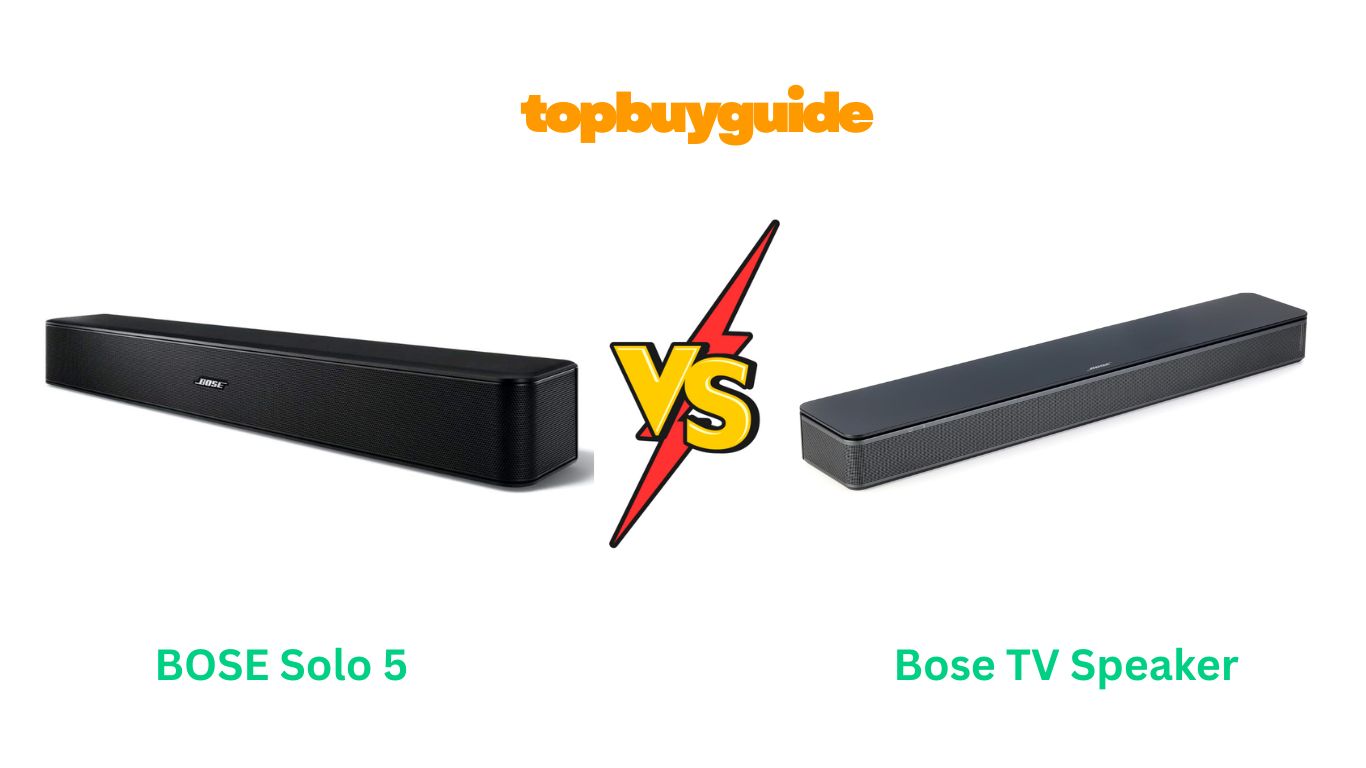
Choosing between the Bose Solo 5 and Bose TV Speaker requires understanding their subtle but important differences. Both compact soundbars improve TV audio significantly, yet they target slightly different needs and setups. I recommend the Bose TV Speaker for most modern TV owners seeking the best upgrade. The TV Speaker offers HDMI-ARC connectivity and a superior 3-driver array with dedicated center tweeter. These improvements deliver noticeably clearer dialogue and more natural sound than the older Solo 5 design.
Why Do I Recommend The Bose TV Speaker?
The Bose TV Speaker stands out as the superior choice for several compelling reasons:
- Advanced 3-Driver Audio Configuration: The TV Speaker features two angled full-range drivers plus a dedicated center channel tweeter specifically for dialogue. This sophisticated setup delivers wider spatial sound and crystal-clear speech reproduction compared to competitors. In contrast, the Solo 5 uses only two centrally-positioned full-range drivers without any dedicated tweeter technology.
- Modern HDMI-ARC Connectivity: The TV Speaker includes HDMI-ARC input for single-cable connection with full audio control from your TV remote. This HDMI-CEC compatibility allows seamless volume control and automatic power-on when your TV starts. The Solo 5 completely lacks HDMI connectivity, offering only optical, coaxial, and analog aux inputs exclusively.
- Roku TV Ready Certification: The TV Speaker carries official Roku TV Ready certification for optimized compatibility and integration. This certification ensures smooth automatic setup, easy access to sound settings in Roku TV menus effortlessly. The Solo 5 predates this certification program and offers no such specialized TV integration capabilities.
- Bose SimpleSync Technology Support: The TV Speaker works with Bose SimpleSync for synchronized playback with other Bose smart speakers. This feature allows you to play TV audio throughout multiple rooms using compatible speakers. The Solo 5 lacks SimpleSync support entirely, limiting it to standalone operation without multi-room capabilities.
- Superior Bluetooth 4.2 Implementation: The TV Speaker utilizes refined Bluetooth 4.2 with improved pairing and connectivity management features. The streamlined Bluetooth implementation provides easier device connections and more stable wireless streaming overall. While the Solo 5 also has Bluetooth, its implementation feels dated by modern standards.
- Optimized Angled Driver Design: The TV Speaker positions its two full-range drivers at angles to create wider soundstage coverage. This angled configuration projects audio more broadly across your viewing area for immersive experiences. The Solo 5’s centrally-positioned drivers deliver more focused but narrower sound projection by comparison.
- Compact Modern Design: The TV Speaker measures just 2.21 inches tall, making it incredibly unobtrusive in front of TVs. The sleek contemporary design with minimal branding blends seamlessly into modern entertainment setups perfectly. The Solo 5’s slightly taller 2.8-inch height and older design language appears more dated visually.
- Bose Music App Compatibility: The TV Speaker integrates with the Bose Music app for firmware updates and additional control options. This app connectivity ensures your soundbar stays current with the latest features and improvements. The Solo 5 offers no app support whatsoever, requiring USB flash drive for software updates.
Side By Side Comparison Chart – Bose Solo 5 vs Bose TV Speaker
| Feature | Bose Solo 5 | Bose TV Speaker |
| Driver Configuration | 2 full-range drivers (center) | 2 full-range drivers + 1 center tweeter |
| Center Channel Tweeter | No | Yes (dedicated) |
| Driver Positioning | Central (non-angled) | Angled outward |
| HDMI-ARC Input | No | Yes |
| HDMI-CEC Support | No | Yes (use TV remote) |
| Optical Digital Input | Yes | Yes (cable included) |
| Coaxial Digital Input | Yes | No |
| 3.5mm Aux Input | Yes | Yes |
| Bluetooth Version | Bluetooth (unspecified) | Bluetooth 4.2 |
| Roku TV Ready | No | Yes (certified) |
| Bose Music App Support | No | Yes (limited) |
| SimpleSync Technology | No | Yes |
| Universal Remote Included | Yes (programmable) | Yes (basic) |
| Remote Control Type | Large universal | Compact dedicated |
| USB Port Function | Software updates only | Not present |
| Auto Power-On | Via audio signal detection | Via audio signal or HDMI-CEC |
| Dimensions (W x D x H) | 21.6″ x 3.4″ x 2.8″ | 23.38″ x 4.02″ x 2.21″ |
| Weight | 6.35 kg (14 lbs) | 1.97 kg (4.34 lbs) |
| Wall Bracket | WB-120 (sold separately) | Bose Soundbar Bracket (sold separately) |
| Subwoofer Output | No | Yes (3.5mm proprietary) |
| Bass Module Compatibility | No | Yes (Bass Module 500/700) |
What Common Features Do Bose Solo 5 and Bose TV Speaker Share?
Dialogue Mode Enhancement
Both soundbars feature dedicated Dialogue Mode activated through the included remote control for enhanced speech clarity. This specialized mode analyzes audio content and emphasizes vocal frequencies to make every word easier to understand. The technology proves especially valuable for news broadcasts, talk shows, and dialogue-heavy dramatic programming. Both systems implement Dialogue Mode without requiring complex menu navigation or app access for simplicity. Users simply press the dedicated button on the remote to toggle the enhancement on or off. The feature benefits viewers who struggle with understanding dialogue through standard TV speakers significantly.
Bass Control Adjustment
Both the Solo 5 and TV Speaker provide bass control buttons on their remotes for instant adjustment. This one-touch bass boost increases low-frequency output when watching action movies or listening to music. The bass adjustment works independently from other audio settings, allowing quick customization without navigating menus. Both soundbars offer adequate bass response for their compact sizes, though neither replaces dedicated subwoofer systems. The bass control proves particularly useful when watching content with dramatic soundtracks and music performances. Users can dial in their preferred bass level based on personal taste and room acoustics easily.
Bluetooth Wireless Music Streaming
Both soundbars include Bluetooth connectivity for wirelessly streaming music, podcasts, and other audio from smartphones. The wireless functionality transforms these TV speakers into versatile music playback systems during non-viewing times. Pairing requires simple one-time setup through the remote’s Bluetooth button, after which devices reconnect automatically. Both systems maintain stable Bluetooth connections within typical wireless range limitations for rooms and living spaces. The Bluetooth implementation allows enjoyment of streaming services, personal music libraries, and podcast content conveniently. Neither soundbar requires smartphone apps for basic Bluetooth music streaming to function properly.
Compact Single-Bar Design
Both models feature all-in-one single soundbar designs without separate subwoofers or satellite speakers required initially. This compact approach simplifies placement and eliminates cable clutter between multiple components around your entertainment area. Both soundbars fit comfortably in front of most TVs on entertainment centers without blocking screens. The low-profile designs allow for flexible positioning on shelves, furniture, or optional wall mounting brackets. Neither soundbar requires complex multi-speaker setup or room calibration procedures to function properly. The simplicity makes both ideal for users wanting immediate improvement over TV speakers without complications.
Auto Power-On Functionality
Both soundbars can automatically power on when detecting incoming audio signals from connected source devices. This convenient feature eliminates the need to manually turn on the soundbar before watching TV. The auto power-on works with optical, aux, and Bluetooth inputs on both models reliably. Both systems also automatically power off after extended periods without audio signal detection for energy savings. The auto power functionality streamlines the viewing experience by reducing the number of remote controls needed. Users can configure this feature based on personal preferences through simple remote control button sequences.
Wall Mounting Capability
Both the Solo 5 and TV Speaker support wall mounting using optional brackets sold separately. Wall mounting creates a clean, minimalist appearance while potentially improving sound projection toward the listening area. The mounting brackets position soundbars directly below wall-mounted TVs for cohesive entertainment center aesthetics. Both models include necessary mounting points and hardware specifications for secure wall installation when brackets purchased. Wall mounting also frees up valuable shelf space on entertainment centers and TV stands significantly. The option provides flexibility for users with different room layouts and mounting preferences available.
Optical Digital Audio Connection
Both soundbars feature optical digital audio inputs for high-quality connection to modern flat-screen TVs. Optical connections transmit audio signals digitally, avoiding potential interference and degradation from analog connections. Both systems include optical cables in the box, eliminating the need for separate cable purchases. The optical input represents Bose’s recommended connection method for optimal sound quality on both models. Both soundbars automatically detect optical audio signals and switch inputs accordingly without manual intervention required. The digital connection ensures clean, clear audio transmission from TV to soundbar consistently.
Bose Signature Sound Quality
Both soundbars deliver Bose’s characteristic sound signature with balanced frequency response and clear audio reproduction. The proprietary audio tuning ensures consistent performance across various content types from dialogue to music effectively. Both models emphasize mid-range clarity and controlled bass response appropriate for compact soundbar designs. Bose’s engineering focuses on maximizing perceived audio quality within physical size constraints on both products. Neither soundbar requires extensive equalization adjustments to achieve satisfying sound for most listeners immediately. The signature sound profile represents decades of Bose acoustic engineering expertise in compact speaker systems.
Common Features of Bose Solo 5 vs Bose TV Speaker
| Feature | Bose Solo 5 | Bose TV Speaker |
| Dialogue Mode | ✓ Yes | ✓ Yes |
| Bass Control Button | ✓ Yes | ✓ Yes |
| Bluetooth Connectivity | ✓ Yes | ✓ Yes (4.2) |
| Wireless Music Streaming | ✓ Yes | ✓ Yes |
| Single Soundbar Design | ✓ Yes | ✓ Yes |
| No Subwoofer Included | ✓ Yes | ✓ Yes |
| Remote Control Included | ✓ Yes | ✓ Yes |
| Optical Digital Input | ✓ Yes (cable included) | ✓ Yes (cable included) |
| 3.5mm Aux Input | ✓ Yes | ✓ Yes |
| Auto Power-On | ✓ Yes | ✓ Yes |
| Auto Power-Off | ✓ Yes | ✓ Yes |
| Wall Mountable | ✓ Yes (bracket separate) | ✓ Yes (bracket separate) |
| Compact Form Factor | ✓ Yes | ✓ Yes |
| Bose Signature Sound | ✓ Yes | ✓ Yes |
| TrueSpace Technology | ✓ Yes | ✓ Yes |
| LED Status Indicators | ✓ Yes | ✓ Yes |
| No On-Unit Controls | ✓ Yes | ✓ Yes |
| 5-foot Power Cord | ✓ Yes | ✓ Yes |
| Plug-and-Play Setup | ✓ Yes | ✓ Yes |
A Detailed Comparison Of the Bose Solo 5 vs Bose TV Speaker
Driver Configuration and Audio Architecture
The TV Speaker utilizes a sophisticated 3-driver array with two angled full-range drivers plus a dedicated center tweeter. The angled positioning creates a wider soundstage that extends beyond the physical speaker dimensions noticeably. The dedicated center tweeter specifically handles dialogue frequencies for exceptional speech clarity and vocal reproduction. This architecture provides more precise channel separation and imaging compared to simpler two-driver configurations available.
The Solo 5 employs two full-range drivers positioned centrally without any dedicated tweeter element whatsoever. These drivers handle the entire frequency spectrum from bass through treble without frequency-specific optimization capabilities. The central positioning creates a more focused but narrower soundstage compared to the TV Speaker’s design. While the Solo 5 delivers acceptable sound quality, it lacks the architectural sophistication of newer designs.
HDMI-ARC Connectivity and Control
The TV Speaker features HDMI-ARC input allowing single-cable connection carrying both audio and control signals seamlessly. With HDMI-CEC enabled TVs, users can control soundbar volume using their existing TV remote exclusively. The HDMI connection also enables automatic power-on when the TV starts, creating an integrated system experience. This modern connectivity standard simplifies setup and daily operation significantly compared to older connection methods.
The Solo 5 completely lacks HDMI connectivity of any kind, relying solely on optical, coaxial, and analog connections. Users cannot leverage HDMI-CEC control features and must use the soundbar’s dedicated remote for all functions. The absence of HDMI represents the Solo 5’s age, as it was designed before HDMI-ARC became standard. This limitation requires more remote controls and manual operation compared to HDMI-equipped soundbars available today.
Subwoofer Expandability Options
The TV Speaker includes a proprietary 3.5mm subwoofer output for connecting optional Bose Bass Module 500 or 700. This expandability allows users to add deep, theater-quality bass when desired without replacing the entire system. The wired subwoofer connection requires only a standard 3.5mm cable or Bose’s proprietary connection cable. This upgrade path provides flexibility for users who initially want simplicity but later desire enhanced bass.
The Solo 5 offers no subwoofer output or expansion capabilities whatsoever in its design limitations. Users seeking enhanced bass must rely solely on the soundbar’s internal drivers and bass control feature. This closed system approach prevents any future upgrades or additions to improve low-frequency performance substantially. The lack of expandability limits the Solo 5 to its factory capabilities permanently without modification options.
Smart Speaker Integration Features
The TV Speaker supports Bose SimpleSync technology for synchronized playback with other compatible Bose smart speakers. This feature allows TV audio to play simultaneously throughout your home using additional Bose wireless speakers. The SimpleSync functionality operates through the Bose Music app on compatible smart speakers and soundbars. Users can create multi-room listening experiences for sports, movies, or other content across different spaces.
The Solo 5 predates Bose’s smart speaker ecosystem and offers no SimpleSync or multi-room audio capabilities. The soundbar operates exclusively as a standalone device without any wireless speaker system integration features. Users cannot expand their audio system or create synchronized multi-room experiences with the Solo 5. This limitation reflects the Solo 5’s design era before smart home audio ecosystems became commonplace.
Remote Control Design and Functionality
The Solo 5 includes a substantial universal remote capable of controlling multiple devices including TVs and players. This programmable remote uses an extensive manufacturer code database for compatibility with various brands. The universal functionality eliminates the need for multiple remotes when properly programmed for all components. However, the large remote size may feel cumbersome compared to more compact modern remote designs.
The TV Speaker comes with a streamlined dedicated remote focused specifically on soundbar functions exclusively. While smaller and more elegant, this remote cannot control other devices like TVs or players. Users who connect via HDMI-CEC can use their existing TV remote instead, reducing remote clutter. The compact remote design feels more contemporary but offers less versatility than the Solo 5’s universal option.
Physical Dimensions and Weight
The TV Speaker measures 23.38 inches wide, 4.02 inches deep, and just 2.21 inches tall. Its ultra-low profile allows placement in front of most TVs without blocking screen views or infrared sensors. The lightweight 4.34-pound construction makes wall mounting easier and puts less stress on mounting hardware. The modern slim profile design aesthetic matches contemporary flat-screen TV styling more cohesively overall.
The Solo 5 measures 21.6 inches wide, 3.4 inches deep, and 2.8 inches tall slightly larger than needed. While still compact, the extra height may block TV sensors or small screen bottoms on certain setups. The heavier 14-pound weight makes the Solo 5 more substantial but potentially more challenging to mount. The dimensional differences reflect evolving soundbar design philosophy toward increasingly minimalist form factors over time.
Roku TV Integration and Certification
The TV Speaker carries official Roku TV Ready certification ensuring seamless compatibility and optimized performance together. This certification enables automatic setup, integrated on-screen sound settings access, and full Roku TV remote compatibility. The certified integration creates a cohesive user experience without configuration challenges or compatibility concerns. Roku TV owners benefit from plug-and-play simplicity with the TV Speaker’s Roku-specific optimizations available.
The Solo 5 lacks Roku TV Ready certification as it predates this specialized compatibility program entirely. While the Solo 5 works with Roku TVs through standard connections, it lacks optimized integration features. Users cannot access soundbar settings through Roku TV menus and must use the dedicated remote. The absence of Roku certification doesn’t prevent functionality but eliminates convenient integration benefits modern users expect.
Conclusion
The Bose TV Speaker emerges as the superior choice for modern TV audio upgrades and enhancements. The advanced 3-driver configuration with dedicated center tweeter delivers noticeably clearer dialogue and wider soundstage. HDMI-ARC connectivity with CEC control enables seamless integration using your existing TV remote exclusively. Subwoofer expandability, SimpleSync technology, and Roku TV Ready certification provide valuable future-proofing and flexibility. The ultracompact 2.21-inch height and lightweight design facilitate easy placement anywhere without visual obstruction. While the Solo 5 remains functional, the TV Speaker’s modern features and superior audio architecture justify choosing it for your entertainment system.
Frequently Asked Questions
Q: Can I use my TV remote to control the Bose Solo 5?
The Solo 5’s universal remote can be programmed to control your TV, but your TV remote cannot control the Solo 5. The Solo 5 lacks HDMI-CEC functionality that would enable TV remote control integration. You must use the included Bose remote for all soundbar volume and mode adjustments. Consider the TV Speaker if integrated TV remote control is important.
Q: Which soundbar has better dialogue clarity?
The Bose TV Speaker delivers superior dialogue clarity due to its dedicated center channel tweeter. This specialized driver focuses specifically on vocal frequencies for enhanced speech reproduction consistently. Both soundbars offer Dialogue Mode, but the TV Speaker’s hardware advantage provides better baseline clarity. The Solo 5’s two-driver system handles dialogue adequately but lacks the TV Speaker’s vocal precision.
Q: Can I add a subwoofer to the Bose Solo 5?
No, the Bose Solo 5 has no subwoofer output and cannot be expanded with additional bass. The soundbar’s bass performance is limited to its internal drivers and bass control feature only. If subwoofer expansion is desired, choose the TV Speaker which supports Bose Bass Modules. The TV Speaker’s expandability provides upgrade flexibility the Solo 5 completely lacks unfortunately.
Q: Which soundbar is better for small TVs?
Both soundbars work well with small TVs, but the Solo 5 is slightly narrower at 21.6 inches. The TV Speaker measures 23.38 inches wide, which may overhang very small TV stands slightly. However, the TV Speaker’s 2.21-inch height is lower, reducing screen obstruction concerns significantly. Consider your specific TV dimensions and stand width when choosing between these models.
Q: Does the Bose TV Speaker work without HDMI connection?
Yes, the TV Speaker works perfectly using the included optical cable instead of HDMI. You can also use the 3.5mm aux input for older TVs without digital outputs. HDMI provides additional benefits like CEC control but isn’t required for basic functionality. The optical connection is Bose’s traditional recommended connection method for reliable performance consistently.
Q: Can both soundbars stream music from my phone?
Yes, both the Solo 5 and TV Speaker feature Bluetooth connectivity for wireless music streaming. Simply press the Bluetooth button on each remote to pair your smartphone or tablet. Both soundbars remember previously paired devices and reconnect automatically when in range. Music streaming works independently from TV connectivity on both models for versatility.
Q: Which soundbar sounds better overall?
The Bose TV Speaker generally delivers superior sound quality due to its advanced 3-driver configuration. The dedicated center tweeter and angled full-range drivers create wider soundstage and better clarity. Both soundbars share Bose’s signature balanced sound, but the TV Speaker’s architecture provides noticeable improvements. However, individual preferences vary, so audition both if possible before purchasing.
Q: Are these soundbars compatible with non-Bose subwoofers?
The TV Speaker only supports official Bose Bass Module 500 or 700 via proprietary connection. Third-party subwoofers are not recommended and may not work properly with the TV Speaker. The Solo 5 offers no subwoofer connectivity whatsoever regardless of brand or type. For third-party subwoofer compatibility, consider different soundbar models with standard subwoofer outputs instead.

Alex Turner is a dedicated product researcher and reviewer at TopBuyGuide.com, known for his clear, honest, and data-driven insights. He spends countless hours testing, comparing, and analyzing products to help readers make confident and informed buying decisions.