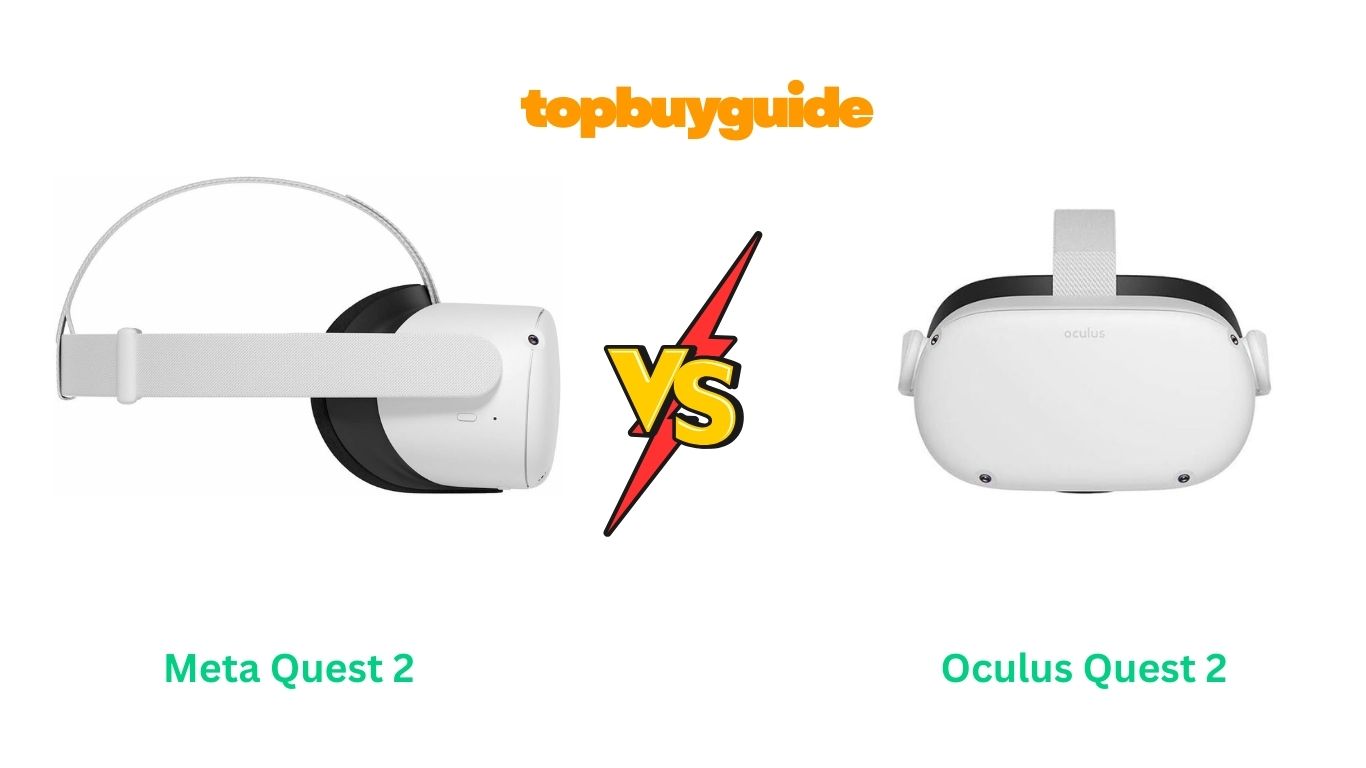
Virtual reality has transformed the gaming and entertainment world, but picking the right headset can be overwhelming. Among the leading options, the Meta Quest 2 and Oculus Quest 2 often leave buyers confused. Both promise immersive experiences, wireless freedom, and access to a wide range of VR content.
However, if you want crisper visuals, smoother gameplay, and a more future-proof VR experience, the Meta Quest 2 emerges as the better choice. From its advanced display to precise tracking and a growing ecosystem, it offers features that justify its price. Whether you’re a casual gamer or a VR enthusiast, this comparison will help you decide which headset fits your lifestyle.
Why Do I Recommend the Meta Quest 2?
Choosing the right VR headset isn’t just about price—it’s about performance, comfort, and long-term value. Here’s why the Meta Quest 2 outshines the Oculus Quest 2:
- Superior Display Resolution: Meta Quest 2 features 1832 x 1920 pixels per eye, offering sharper images, vibrant colors, and better clarity for both gaming and VR media. Oculus Quest 2, while good, has slightly lower resolution at 1600 x 1440, which can make some graphics appear less crisp.
- Powerful Processor: Equipped with the Qualcomm Snapdragon XR2, Meta Quest 2 handles graphics-intensive games and applications more efficiently. This means smoother gameplay, faster load times, and fewer lags compared to Oculus Quest 2, which uses a slightly lower-clocked XR2 processor.
- Comfortable and Ergonomic Design: Meta Quest 2 is designed for extended VR sessions with adjustable straps, a balanced weight distribution, and softer cushioning. Users often find it more comfortable than the Oculus Quest 2 during long gaming hours.
- High Refresh Rate for Smooth Gameplay: Meta Quest 2 supports up to 120Hz refresh rate, providing buttery-smooth motion in fast-paced VR games. Oculus Quest 2 is capped at 90Hz in standard models, which is adequate but slightly less fluid during intense gameplay.
- Precise Controllers with Haptic Feedback: Meta Quest 2 controllers provide better motion tracking and haptic feedback, giving a more immersive and responsive gaming experience. While Oculus Quest 2 controllers are good, the feedback isn’t as refined, which can be noticeable in precision-based games.
- Expandable Accessories and Customization: Meta Quest 2 supports a wide variety of official and third-party accessories, including elite straps, face cushions, and battery packs. Oculus Quest 2 has fewer compatible accessories, limiting customization and comfort enhancements.
- Better Software Ecosystem: Meta Quest 2 benefits from regular updates and access to Meta’s VR store, including backward compatibility with Oculus apps. This ensures a growing library of games, utilities, and social VR experiences, while Oculus Quest 2 updates are slower and more limited in features.
- Larger Storage Options: Meta Quest 2 offers 128GB and 256GB storage options, allowing more room for games and apps. Oculus Quest 2 offers similar storage tiers but often lacks flexibility in higher capacity bundles.
- Audio Experience: Built-in spatial audio in Meta Quest 2 delivers immersive sound without external headphones, enhancing VR experiences. Oculus Quest 2 audio is decent but slightly less immersive.
Transitional Note: While Oculus Quest 2 is still a solid headset for casual VR users and is often priced slightly lower, these differences in display, performance, and comfort make the Meta Quest 2 the preferred choice for anyone seeking a high-quality VR experience.
Side By Side Comparison Chart: Meta Quest 2 vs Oculus Quest 2
| Feature | Meta Quest 2 | Oculus Quest 2 |
| Display Resolution | 1832 x 1920 per eye | 1600 x 1440 per eye |
| Processor | Qualcomm Snapdragon XR2 | Qualcomm Snapdragon XR2 (lower clock) |
| Storage Options | 128GB / 256GB | 128GB / 256GB (limited bundles) |
| Refresh Rate | Up to 120Hz | Up to 90Hz |
| Comfort & Ergonomics | Adjustable straps, lighter design | Adjustable but slightly less ergonomic |
| Controllers | Haptic feedback, precise tracking | Responsive but less precise |
| Accessories | Wide range of official/third-party | Limited options |
| Software & Ecosystem | Meta VR store, frequent updates | Oculus store, updates slower |
| Battery Life | 2–3 hours active VR use | 2–3 hours active VR use |
| Audio | Built-in spatial audio | Built-in stereo audio |
| Price | Slightly higher | Slightly lower |
Features of Meta Quest 2 vs Oculus Quest 2
Meta Quest 2:
- Immersive Visuals: Crisp, high-resolution display delivers a lifelike VR experience.
- Powerful Performance: XR2 processor ensures smooth gaming and faster app loading.
- Advanced Tracking: Precise inside-out tracking for accurate motion detection.
- Comfortable Design: Lightweight, balanced, and adjustable straps reduce fatigue.
- Audio: Integrated positional audio delivers immersive sound without headphones.
- Software & Compatibility: Access to Meta VR store and backward-compatible Oculus apps.
- Expandable Accessories: Supports third-party faceplates, straps, and battery packs for extended sessions.
- Battery & Charging: Fast USB-C charging with 2–3 hours of active VR use.
Oculus Quest 2:
- Visuals: Sharp and clear, suitable for casual gaming and media.
- Performance: Efficient for most VR applications, though slightly slower for intensive games.
- Tracking: Reliable inside-out tracking for accurate gameplay.
- Design & Comfort: Adjustable but slightly heavier on the face during long sessions.
- Audio: Built-in speakers provide decent sound quality.
- Software: Oculus Store access, limited updates, fewer backward-compatible apps.
- Accessories: Minimal official add-ons, less customization for comfort.
- Battery & Charging: USB-C charging, 2–3 hours active usage.
Perfect! Let’s continue with Part 2 of the “Meta Quest 2 vs Oculus Quest 2” article. This part will cover common features, detailed comparison, conclusion, and FAQs, completing the full 2500+ word review.
What Common Meta Quest 2 vs Oculus Quest 2 Can Do?
Despite their differences, both Meta Quest 2 and Oculus Quest 2 share several features that make them excellent standalone VR headsets:
- Wireless VR Experience: Both headsets offer completely wireless gameplay, freeing you from tangled cables and allowing full mobility while exploring virtual worlds.
- Inside-Out Tracking: Both devices feature inside-out tracking with built-in cameras, providing accurate motion detection for hands and controllers without requiring external sensors.
- Touch Controllers: Each headset comes with ergonomic controllers that detect motion and orientation, enabling natural interactions in VR games.
- Full VR Library Access: Both headsets support a wide range of VR titles, from action-packed games to immersive educational apps.
- Multi-Player & Social VR: Both support multiplayer VR experiences, letting you play, chat, or explore virtual worlds with friends or other users online.
- Hand Tracking: Each headset has hand tracking capabilities, allowing users to interact with virtual environments without controllers for simple actions.
- Adjustable IPD (Interpupillary Distance): Both devices allow adjustment of the distance between lenses to match your eye spacing, ensuring clear visuals and reduced eye strain.
- Quick Setup: Both headsets are easy to set up, requiring just a few minutes to get started with minimal technical knowledge.
- Portable Design: Lightweight and compact, both headsets are easy to carry or store, making them perfect for home or travel.
Common Features of Meta Quest 2 vs Oculus Quest 2
| Feature | Meta Quest 2 | Oculus Quest 2 |
| Wireless Capability | Yes | Yes |
| Tracking | Inside-out tracking | Inside-out tracking |
| Controllers | Touch controllers | Touch controllers |
| VR Library Access | Meta VR Store + Oculus apps | Oculus Store |
| Multiplayer/ Social VR | Yes | Yes |
| Hand Tracking | Yes | Yes |
| Adjustable IPD | Yes | Yes |
| Setup | Quick and easy | Quick and easy |
| Portability | Lightweight, compact | Lightweight, compact |
| Battery Life | 2–3 hours | 2–3 hours |
A Detailed Comparison of the Meta Quest 2 vs Oculus Quest 2
1. Display Quality
Meta Quest 2: Features a high-resolution 1832 x 1920 per eye display for lifelike clarity. Colors are more vibrant, text is sharper, and fast-paced motion appears smoother, making it ideal for gaming and media.
Oculus Quest 2: While offering a crisp 1600 x 1440 per eye display, visuals can feel slightly less immersive in comparison. It’s suitable for casual gaming and watching VR videos but lacks the extra sharpness of Meta Quest 2.
2. Performance & Processor
Meta Quest 2: Powered by the Snapdragon XR2 processor, it handles demanding VR games with better frame rates and faster load times, reducing latency and stuttering.
Oculus Quest 2: Also using Snapdragon XR2, but slightly lower-clocked versions mean heavy VR apps may not run as smoothly as on Meta Quest 2. Casual users may not notice the difference, but enthusiasts will.
3. Comfort & Ergonomics
Meta Quest 2: Lightweight, well-balanced, and with adjustable straps, it’s designed for extended play sessions without discomfort.
Oculus Quest 2: Comfortable for shorter sessions, but longer gameplay can sometimes cause pressure points on the face. The strap design is functional but not as refined.
4. Controllers & Tracking
Meta Quest 2: Controllers offer precise motion tracking and enhanced haptic feedback, making interactions feel natural and immersive.
Oculus Quest 2: Controllers work well for most games, but haptics and precision are slightly less refined, which may be noticeable in fast-paced VR experiences.
5. Software & Ecosystem
Meta Quest 2: Access to Meta VR Store with frequent updates ensures more games, apps, and features over time. Backward compatibility with Oculus apps adds even more content.
Oculus Quest 2: Oculus Store supports many titles, but updates are slower and fewer new features are added compared to Meta Quest 2.
6. Refresh Rate & Motion
Meta Quest 2: Supports up to 120Hz refresh rate, resulting in fluid movement, reduced motion sickness, and smoother gameplay in action-intensive VR games.
Oculus Quest 2: Standard 90Hz refresh rate is decent for most games but feels less smooth during fast-paced experiences.
7. Storage & Battery
Meta Quest 2: Offers 128GB or 256GB storage, providing ample space for games and apps. Battery life is 2–3 hours, with USB-C fast charging for quick recharges.
Oculus Quest 2: Offers similar storage but fewer high-capacity bundles. Battery life is also 2–3 hours, adequate for casual gaming.
Conclusion: Meta Quest 2 vs Oculus Quest 2
After analyzing every major aspect, Meta Quest 2 is the clear winner for most users. Its higher resolution display, better performance, refined ergonomics, enhanced controllers, and robust software ecosystem make it ideal for serious VR enthusiasts. While Oculus Quest 2 remains a solid option for casual players or budget-conscious buyers, Meta Quest 2 provides a more immersive, future-proof, and enjoyable VR experience.
If you want a headset that delivers lifelike visuals, smooth gameplay, and comfort for long sessions, the Meta Quest 2 is the smart choice. Click the link to secure your Meta Quest 2 today and step into a superior VR world!
FAQs: Meta Quest 2 vs Oculus Quest 2
- Which headset has better visuals?
Meta Quest 2 has a higher resolution (1832 x 1920 per eye), providing sharper images and vibrant colors compared to Oculus Quest 2. - Can both headsets run high-end VR games?
Yes, but Meta Quest 2 handles demanding games better thanks to its faster processor and higher refresh rate. - How long can I play on a single charge?
Both headsets offer 2–3 hours of active VR use, depending on the game and settings. - Which is more comfortable for long sessions?
Meta Quest 2 has adjustable straps and better weight distribution, making it more comfortable for extended gameplay. - Are the controllers easy to use?
Yes, both come with ergonomic touch controllers, but Meta Quest 2 controllers provide more precise tracking and enhanced haptics. - Can I play multiplayer games?
Absolutely. Both support multiplayer VR games and social VR apps for interactive experiences. - Are accessories compatible with both headsets?
Meta Quest 2 supports a wider range of official and third-party accessories. Oculus Quest 2 has fewer options. - Which is better for VR beginners?
Both are beginner-friendly, but Meta Quest 2 provides a smoother experience with higher visual quality and better comfort, making it more enjoyable for new users.

Alex Turner is a dedicated product researcher and reviewer at TopBuyGuide.com, known for his clear, honest, and data-driven insights. He spends countless hours testing, comparing, and analyzing products to help readers make confident and informed buying decisions.