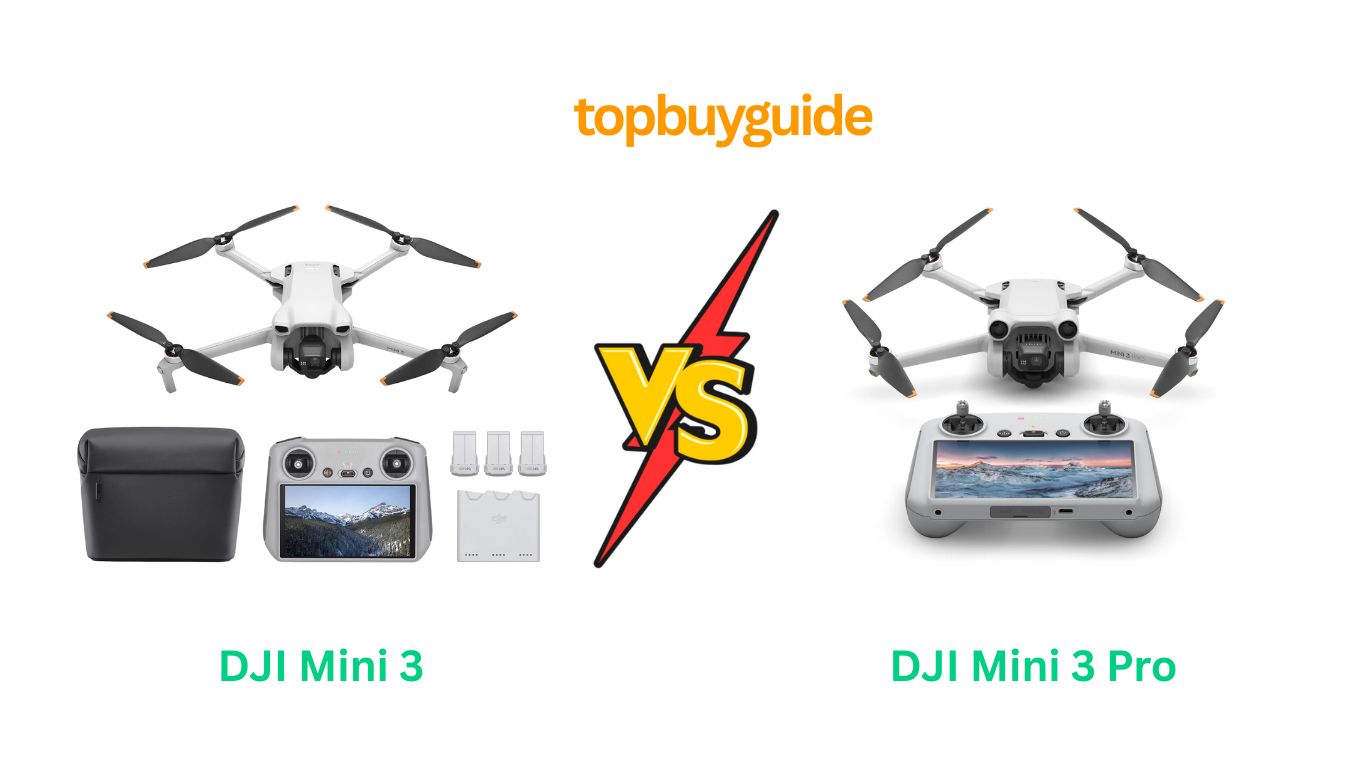
Choosing between the DJI Mini 3 and Mini 3 Pro requires careful consideration. Both offer exceptional 4K HDR video and compact sub-250g designs perfect for travel. I recommend the DJI Mini 3 Pro for its tri-directional obstacle avoidance system and advanced tracking features. The intelligent sensors provide crucial crash protection and enable autonomous subject tracking capabilities. These professional features justify the price difference for serious aerial content creators.
Why Do I Recommend The DJI Mini 3 Pro?
The DJI Mini 3 Pro delivers professional-grade features that significantly enhance your flying experience and creative possibilities:
- Tri-Directional Obstacle Avoidance System: The Mini 3 Pro features forward, backward, and downward obstacle sensors with APAS 4.0 technology. In contrast, the Mini 3 has only downward sensors for positioning. This three-way protection dramatically reduces crash risks in complex environments.
- ActiveTrack 4.0 Subject Tracking: The Mini 3 Pro automatically follows and tracks subjects with Trace and Parallel modes. Meanwhile, the Mini 3 lacks any subject tracking capabilities whatsoever. You can capture dynamic action shots hands-free with intelligent follow features.
- Advanced Intelligent Flight Modes: The Mini 3 Pro includes FocusTrack, Spotlight 2.0, Point of Interest 3.0, and MasterShots. Conversely, the Mini 3 offers only basic QuickShots without advanced autonomous modes. Professional-looking videos become effortless with one-tap automated flight patterns.
- 4K Video at 60fps: The Mini 3 Pro records smooth 4K footage at 60 frames per second. The Mini 3 maxes out at 4K 30fps for high-resolution recording. Higher frame rates provide smoother motion and better slow-motion capabilities.
- 48MP Photo Mode: The Mini 3 Pro captures stunning 48-megapixel photos with exceptional detail and clarity. The Mini 3 lacks this high-resolution mode for still photography. Professional-quality prints and large-format outputs become possible with increased resolution.
- D-Cinelike Color Profile: The Mini 3 Pro includes flat color profiles for professional post-production color grading. The Mini 3 offers only standard color profiles without advanced options. Serious videographers gain more creative control over their final footage.
- Hyperlapse and Timelapse Features: The Mini 3 Pro creates stunning time-lapse videos with automated camera movements. The Mini 3 doesn’t include any time-lapse or hyperlapse functionality. These creative tools add professional polish to your aerial content.
- Five-Shot Exposure Bracketing: The Mini 3 Pro captures five bracketed exposures for HDR photo merging. The Mini 3 is limited to three-shot bracketing sequences only. Greater dynamic range and detail preservation result from additional exposure variations.
Side By Side Comparison Chart: DJI Mini 3 vs Mini 3 Pro
| Feature | DJI Mini 3 | DJI Mini 3 Pro |
| Obstacle Avoidance | Downward Only | Tri-Directional (Forward, Backward, Downward) |
| APAS Technology | No | APAS 4.0 |
| Subject Tracking | No | ActiveTrack 4.0 (Trace & Parallel) |
| FocusTrack | No | Yes |
| Spotlight Mode | No | Spotlight 2.0 |
| Point of Interest | No | Point of Interest 3.0 |
| MasterShots | No | Yes |
| 4K Video Frame Rate | 30fps Max | 60fps Max |
| 48MP Photo Mode | No | Yes |
| D-Cinelike Profile | No | Yes |
| Hyperlapse | No | Yes |
| Timelapse | No | Yes |
| Exposure Bracketing | 3 Shots | 5 Shots |
| Max Flight Time | 38 Minutes | 34 Minutes |
| Weight | 248g | 249g |
| Price (with RC-N1) | Around $559 | Around $759 |
What Common Features Can the DJI Mini 3 vs Mini 3 Pro Do?
Sub-250g Lightweight Design
Both drones weigh under 250 grams, keeping them in the regulator-friendly category. This weight classification exempts them from registration requirements in many countries and regions. The Mini 3 weighs 248 grams while the Pro weighs 249 grams exactly. Both feature identical foldable designs measuring 145×90×62mm when folded for portability. The compact size fits easily into small bags or even jacket pockets. Both drones unfold to 251×362×70mm with propellers attached for flying. Travel becomes effortless with these incredibly portable aerial photography solutions.
1/1.3-Inch CMOS Sensor
Both models utilize the same impressive 1/1.3-inch CMOS sensor for image capture. This sensor size represents a significant upgrade from previous Mini series models. The 2.4μm 4-in-1 large pixels improve low-light performance and image quality dramatically. Both drones feature an f/1.7 aperture lens for excellent light-gathering capability. Dual native ISO technology enhances performance in various lighting conditions consistently. The 24mm equivalent focal length provides versatile framing options for compositions. Chip-level HDR technology delivers true-to-life colors with enhanced dynamic range.
4K HDR Video Recording
The Mini 3 and Mini 3 Pro both record stunning 4K HDR video. Detail-rich footage captures both highlight and shadow information with exceptional clarity. HDR recording works at 24, 25, and 30 frames per second. The Normal color profile provides ready-to-share footage straight from the camera. Both drones support 2.7K and Full HD resolution options as well. Video bitrates reach up to 150 Mbps for maximum quality preservation. Digital zoom capabilities extend to 2x in 4K and 4x in Full HD.
True Vertical Shooting Mode
Both drones feature innovative gimbal designs enabling true vertical 9:16 shooting orientation. The camera rotates 90 degrees for perfect social media portrait format. Instagram Reels, TikTok videos, and Stories benefit from native vertical composition. Both models switch seamlessly between landscape and portrait orientations during flight. The three-axis gimbal maintains perfect stabilization in both orientations consistently. Vertical shooting eliminates the need for cropping widescreen footage later. This feature makes both drones ideal for modern social media content creation.
QuickShots Automated Flight Patterns
Both the Mini 3 and Mini 3 Pro include QuickShots intelligent flight modes. These automated patterns create professional-looking videos with single-tap simplicity effortlessly. Available modes include Dronie, Circle, Helix, Rocket, and Boomerang maneuvers. QuickShots work in both landscape and portrait orientations for maximum versatility. The drones automatically execute complex flight paths while keeping subjects perfectly framed. Results can be downloaded directly to your mobile device via QuickTransfer. Even beginners create cinematic aerial footage without advanced piloting skills required.
Extended Flight Time Options
Both drones support two battery options for different flight duration needs. The standard Intelligent Flight Battery provides 33 minutes for the Mini 3. The Mini 3 Pro achieves 34 minutes with the same standard battery. Both models support the optional Intelligent Flight Battery Plus for extended missions. The Plus battery increases flight time to 44 minutes for Mini 3. The Mini 3 Pro achieves 47 minutes with the larger battery pack. Actual flight times vary based on wind conditions and flying style. Both drones charge via 30W USB-C for convenient power replenishment.
DJI O2 Video Transmission
Both models feature DJI’s O2 digital video transmission technology for reliable connectivity. Maximum transmission range reaches 10 kilometers in FCC regions without obstacles. The anti-interference capability ensures stable video feeds even in challenging environments. Both drones deliver 1080p/30fps live video to controllers in real-time. Transmission latency stays around 200 milliseconds for responsive control feedback. Both work with DJI RC-N1 and DJI RC controllers interchangeably. Strong signal reliability keeps you connected throughout your entire flight session.
Panorama Photography Modes
The Mini 3 and Mini 3 Pro both capture stunning panoramic photographs. Available modes include Sphere, 180-degree, and Wide-Angle panoramas automatically. The drones automatically capture multiple images and stitch them together seamlessly. Sphere mode creates immersive 360-degree photos perfect for virtual tours. 180-degree panoramas capture sweeping landscapes with incredible detail and width. Wide-angle mode extends your field of view beyond the standard lens. All panorama modes work flawlessly in both landscape and portrait orientations.
Common Features of DJI Mini 3 vs Mini 3 Pro
| Feature | DJI Mini 3 | DJI Mini 3 Pro |
| Weight | 248g | 249g |
| Camera Sensor | 1/1.3-inch CMOS | 1/1.3-inch CMOS |
| Pixel Size | 2.4μm (4-in-1) | 2.4μm (4-in-1) |
| Aperture | f/1.7 | f/1.7 |
| Dual Native ISO | Yes | Yes |
| 4K HDR Video | Yes (24/25/30fps) | Yes (24/25/30fps) |
| 2.7K Video | Yes (up to 60fps) | Yes (up to 60fps) |
| 1080p Video | Yes (up to 60fps) | Yes (up to 60fps) |
| True Vertical Shooting | Yes (9:16) | Yes (9:16) |
| Three-Axis Gimbal | Yes | Yes |
| QuickShots | 5 Modes | 5 Modes |
| Panorama Modes | Sphere, 180°, Wide | Sphere, 180°, Wide |
| Standard Battery Flight | 33 Minutes | 34 Minutes |
| Plus Battery Flight | 44 Minutes | 47 Minutes |
| Video Transmission | DJI O2 (10km) | DJI O2 (10km) |
| Max Speed | 16 m/s (S Mode) | 16 m/s (S Mode) |
| Wind Resistance | Level 5 (10.7 m/s) | Level 5 (10.7 m/s) |
| Operating Temperature | -10°C to 40°C | -10°C to 40°C |
| Compatible Controllers | RC-N1, DJI RC | RC-N1, DJI RC |
| QuickTransfer | Yes (Wi-Fi, 25MB/s) | Yes (Wi-Fi, 25MB/s) |
| GPS Return to Home | Yes | Yes |
| Precise Hovering | Yes | Yes |
| Auto Takeoff/Landing | Yes | Yes |
| Downward Vision Sensors | Yes | Yes |
| Infrared Sensing | Yes (Downward) | Yes (Downward) |
A Detailed Comparison Of the DJI Mini 3 vs Mini 3 Pro
Obstacle Avoidance Capabilities
The Mini 3 Pro features comprehensive tri-directional obstacle avoidance with forward, backward, and downward sensors. These sensors use binocular vision and infrared technology to detect obstacles in real-time. APAS 4.0 enables intelligent route planning to automatically navigate around detected obstacles safely. The system offers Bypass and Brake modes for different flying scenarios. Forward and backward sensors provide partial protection for sides and top areas.
The Mini 3 includes only downward-facing vision and infrared sensors for positioning assistance. It cannot detect obstacles ahead, behind, or to the sides during flight. Without APAS technology, the Mini 3 relies entirely on pilot awareness. The downward sensors enable stable hovering and precise landing but no collision avoidance. DJI offers optional 360-degree propeller guards for added physical protection instead.
Subject Tracking and Intelligent Features
The Mini 3 Pro delivers advanced ActiveTrack 4.0 with automatic subject tracking capabilities. Trace mode follows subjects at a constant distance while maintaining perfect framing. Parallel mode flies alongside subjects at a constant angle for dynamic shots. FocusTrack keeps subjects centered even during manual flight with pilot assistance. Spotlight 2.0 maintains subject centering while you control flight direction independently. Point of Interest 3.0 circles subjects automatically at set radius and speed.
The Mini 3 lacks any form of subject tracking or follow-me functionality. All flight maneuvers require complete manual control from the pilot throughout. There’s no intelligent assistance for keeping subjects in frame during movement. QuickShots provide automated flight patterns but without subject recognition or tracking. Creative shots requiring subject tracking become impossible without manual piloting skill.
Video Recording Capabilities
The Mini 3 Pro records 4K video at up to 60 frames per second for ultra-smooth footage. The D-Cinelike flat color profile enables professional color grading in post-production. Normal color profile provides vibrant, ready-to-share footage directly from camera. Maximum bitrate reaches 150 Mbps for exceptional quality preservation and detail. All video modes support HDR recording at lower frame rates automatically. Hyperlapse mode creates stunning time-lapse videos with automated camera movement sequences.
The Mini 3 records 4K video maxing out at 30 frames per second only. Only the Normal color profile is available without flat color options. The same 150 Mbps maximum bitrate ensures high-quality video recording. HDR recording works perfectly at 24, 25, and 30fps frame rates. No hyperlapse or timelapse functionality exists in the Mini 3 whatsoever. The video quality remains excellent but with fewer creative options available.
Photo Capture Options
The Mini 3 Pro shoots in full 48-megapixel resolution for maximum detail capture. Twelve-megapixel mode uses pixel binning for improved low-light performance significantly. Five-shot Auto Exposure Bracketing captures wider dynamic range for HDR merging. The increased resolution enables large-format prints and significant cropping flexibility. RAW format support provides maximum flexibility for professional photo editing workflows.
The Mini 3 captures 12-megapixel photos with excellent quality using pixel binning. No 48-megapixel high-resolution mode exists in the standard Mini 3. Three-shot exposure bracketing provides decent HDR capability but with less range. Photo quality remains excellent for social media and standard print sizes. RAW support enables some editing flexibility though with lower base resolution.
Flight Time Performance
The Mini 3 achieves 38 minutes maximum flight time with the standard battery. This represents about four minutes longer than the Mini 3 Pro. The slightly lighter weight and fewer sensors contribute to extended endurance. With the optional Battery Plus, flight time extends to 44 minutes. Real-world flight times typically range from 25-30 minutes with standard batteries.
The Mini 3 Pro offers 34 minutes maximum flight time with standard batteries. The additional sensors and features consume slightly more power during operation. Battery Plus extends the Pro’s flight time to 47 minutes maximum. Despite shorter duration, the Mini 3 Pro’s flight time remains excellent. Most pilots find 34 minutes sufficient for capturing desired footage completely.
Price and Value Proposition
The Mini 3 with RC-N1 controller starts around $559 for budget-conscious buyers. This represents approximately $200 savings compared to the Mini 3 Pro model. The lower price makes drone photography accessible to more beginner pilots. Without obstacle avoidance, it’s best suited for open-area flying only. The value proposition works for casual users without professional needs or requirements.
The Mini 3 Pro with RC-N1 controller costs around $759 reflecting premium features. The additional $200 buys critical obstacle avoidance and professional tracking capabilities. Advanced features justify the investment for serious content creators and professionals. The Mini 3 Pro with DJI RC controller bundle costs $909. For those needing professional features, the Pro offers exceptional value overall.
Ideal Use Cases
The Mini 3 Pro excels for professional content creation requiring subject tracking features. Mountain bikers, runners, and action sports enthusiasts benefit from automated following modes. Forest and urban environments become safer with tri-directional obstacle detection systems. Videographers wanting flat color profiles for color grading should choose Pro. The advanced features support complex shots that would otherwise require experienced pilots.
The Mini 3 works perfectly for casual aerial photography in open spaces. Landscape photographers flying in clear areas don’t need extensive obstacle avoidance. Budget-conscious beginners learning basics in parks and fields find it sufficient. Travel vloggers wanting lightweight portability without professional features save money here. The Mini 3 delivers excellent image quality without advanced autonomous capabilities.
Conclusion
The DJI Mini 3 Pro stands as the superior choice for serious aerial photographers. Its tri-directional obstacle avoidance prevents costly crashes and enables confident flying anywhere. ActiveTrack 4.0 delivers professional subject tracking that transforms action footage completely effortlessly. The 4K 60fps video, 48MP photos, and D-Cinelike profile provide professional-grade creative tools. While the Mini 3 offers excellent value at $559, the Pro’s $759 price includes features worth every penny. Obstacle avoidance alone saves potential repair costs that exceed the price difference. Invest in the Mini 3 Pro for professional capabilities, crash protection, and future-proof features that elevate your aerial content dramatically.
FAQs
Q: What’s the main difference between DJI Mini 3 and Mini 3 Pro?
A: The primary difference is obstacle avoidance sensors and intelligent tracking features. The Mini 3 Pro has forward, backward, and downward sensors with APAS 4.0 technology. The standard Mini 3 only has downward sensors without collision avoidance. The Pro also adds ActiveTrack, 4K 60fps, 48MP photos, and professional color profiles.
Q: Is the Mini 3 Pro worth $200 more than the Mini 3?
A: Yes, if you need obstacle avoidance or subject tracking capabilities. The tri-directional sensors prevent crashes that could cost hundreds in repairs. ActiveTrack enables professional-looking action footage without manual piloting skills. For beginners flying in open areas only, the Mini 3 provides adequate functionality.
Q: Can the DJI Mini 3 track and follow subjects automatically?
A: No, the Mini 3 lacks any subject tracking or follow-me features. Only the Mini 3 Pro includes ActiveTrack 4.0 with Trace and Parallel modes. All subject-following shots with the Mini 3 require complete manual piloting. The Pro’s FocusTrack also helps keep subjects centered during manual flight.
Q: Does the Mini 3 record 4K video at 60fps?
A: No, the Mini 3 maxes out at 4K 30fps for video recording. Only the Mini 3 Pro supports 4K at 60 frames per second. Both drones record 2.7K at 60fps and 1080p at 60fps. The Pro’s higher frame rate provides smoother footage and better slow-motion options.
Q: Which drone has longer battery life?
A: The Mini 3 has slightly longer flight time at 38 minutes versus 34 minutes. The lighter weight and fewer sensors contribute to extended battery life. With optional Battery Plus, Mini 3 reaches 44 minutes while Pro achieves 47 minutes. Both offer excellent endurance for aerial photography missions overall.
Q: Do both drones require FAA registration?
A: No, both weigh under 250 grams and avoid registration for recreational use. The Mini 3 weighs 248g and Mini 3 Pro weighs 249g. In most countries, sub-250g drones have fewer regulatory restrictions significantly. Commercial use may still require registration regardless of drone weight.
Q: Can I use the same batteries in both drones?
A: Yes, both drones are compatible with identical battery options. The standard Intelligent Flight Battery and Battery Plus work interchangeably. Both use DJI’s 30W USB-C charging system for convenience. Battery compatibility makes it easy to share power sources between models.
Q: Does the Mini 3 support professional color profiles?
A: No, the Mini 3 only offers Normal color profile for video. The Mini 3 Pro includes D-Cinelike flat profile for professional color grading. Serious videographers wanting post-production flexibility need the Pro model. The Mini 3’s Normal profile produces excellent ready-to-share footage immediately though.

Alex Turner is a dedicated product researcher and reviewer at TopBuyGuide.com, known for his clear, honest, and data-driven insights. He spends countless hours testing, comparing, and analyzing products to help readers make confident and informed buying decisions.