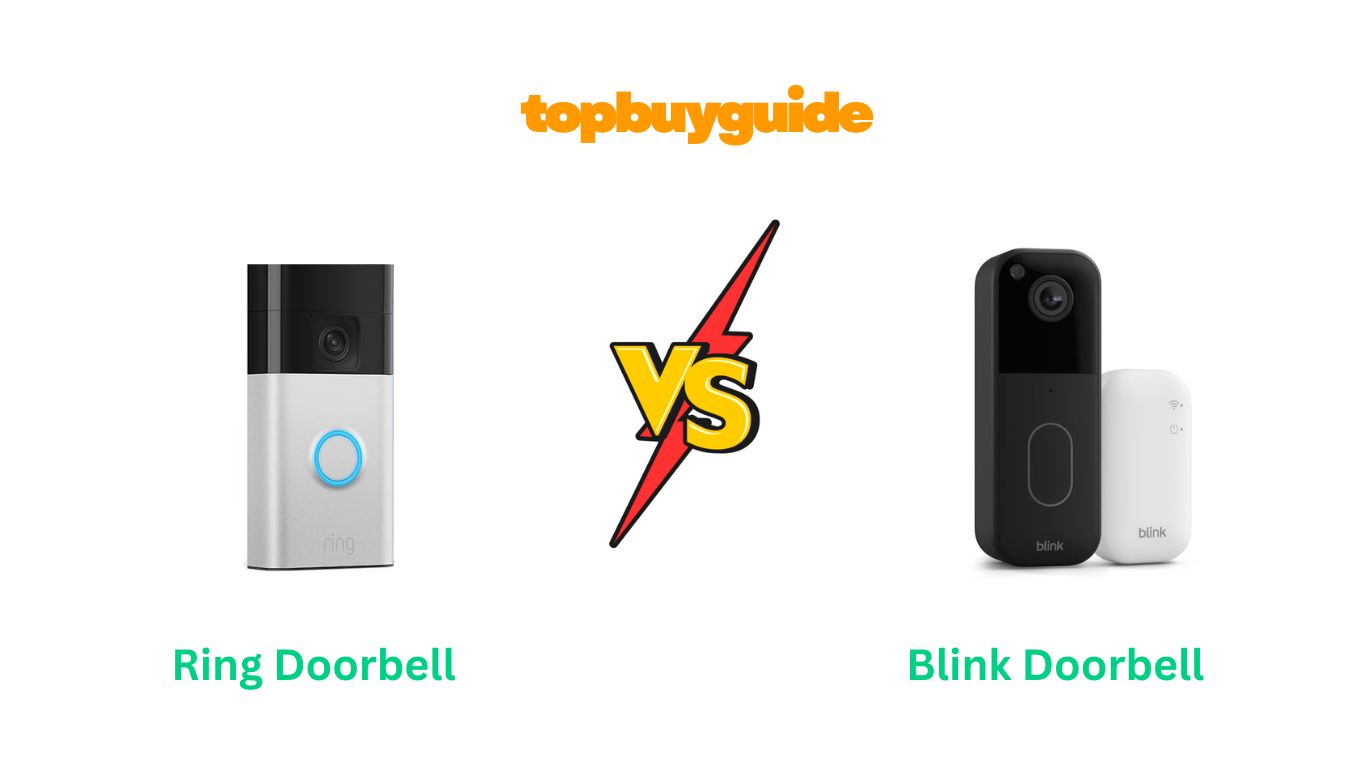
Choosing between Ring and Blink doorbells can feel overwhelming. Both are Amazon-owned brands offering reliable smart home security. After extensive testing and comparison, I recommend the Ring Battery Doorbell for most homeowners. Ring delivers superior video quality with 1440p resolution and advanced features like Head-to-Toe Video. While Blink offers excellent value, Ring’s comprehensive ecosystem and professional-grade features justify the modest price difference for serious home security.
Why Do I Recommend The Ring Battery Doorbell?
The Ring Battery Doorbell outperforms Blink across multiple critical categories. Here’s why Ring earns my recommendation:
- Superior Video Resolution: Ring offers 1440p HD video compared to Blink’s 1080p, providing sharper images for better identification. The enhanced clarity helps you recognize faces and read package labels more effectively.
- Advanced Head-to-Toe Coverage: Ring’s 150-degree vertical field captures everything from visitors’ heads down to packages. In contrast, Blink’s standard view often misses ground-level deliveries, requiring manual camera angle adjustments.
- Color Night Vision Technology: Ring delivers vibrant color footage even in darkness, while Blink relies on basic infrared. This means Ring users can identify clothing colors and vehicle shades at night—crucial for security.
- 3D Motion Detection with Zones: Ring’s intelligent motion tracking pinpoints exact visitor locations and pathways. Blink offers basic motion zones, but lacks Ring’s Bird’s Eye View aerial mapping feature.
- Package Detection Alerts: Ring specifically notifies you when packages arrive within designated zones. Blink only provides general motion alerts, requiring you to check every notification manually.
- Extensive Smart Home Integration: Ring connects seamlessly with Alexa, Google Home, and professional monitoring services. Blink primarily works with Alexa only, limiting your smart home expansion options.
- Removable Quick-Release Battery: Ring’s battery pack slides out for convenient charging without dismounting the doorbell. Blink requires AA battery replacements, which costs more over time.
- Professional Monitoring Options: Ring offers optional 24/7 professional monitoring through Ring Protect Pro. Blink lacks this feature, providing only self-monitoring capabilities.
Side By Side Comparison Chart: Ring vs Blink Doorbell
| Feature | Ring Battery Doorbell | Blink Video Doorbell |
| Video Resolution | 1440p HD (1:1 aspect ratio) | 1440p HD (2nd gen) / 1080p (1st gen) |
| Field of View | 150° x 150° | 150° (2nd gen) / 135° (1st gen) |
| Night Vision | Color Night Vision | HD Infrared |
| Motion Detection | 3D Motion with Bird’s Eye View | Standard Motion Detection |
| Package Detection | Yes (with subscription) | No |
| Battery Life | 6-12 months (rechargeable) | Up to 2 years (3 AA batteries) |
| Battery Type | Quick-Release Rechargeable | 3 AA Lithium Batteries |
| Two-Way Audio | Yes with Audio+ | Yes, Standard |
| Cloud Storage | Ring Protect ($4-10/month) | Blink Subscription ($3/month) or Sync Module |
| Local Storage | No | Yes (with Sync Module) |
| Smart Home Integration | Alexa, Google Home | Alexa only |
| Professional Monitoring | Available | Not available |
| Price | $99.99 | $59.99-$69.99 |
| Weather Resistance | IP55 rated | IP65 rated (2nd gen) |
| Installation | Wire-free or Hardwired | Wire-free or Hardwired |
What Common Ring vs Blink Doorbell Features Can Do?
High-Definition Video Recording
Both Ring and Blink doorbells deliver crystal-clear HD video for comprehensive home monitoring. Ring captures footage at 1440p resolution in a square aspect ratio, ensuring nothing escapes view. The high definition ensures every facial feature remains identifiable, even from several feet away. Blink’s second-generation model matches Ring’s 1440p quality, upgrading from the original’s 1080p. Both systems stream live video to your smartphone instantly when motion activates. The clarity proves essential for identifying delivery personnel, unexpected visitors, or suspicious activity around your property.
Two-Way Audio Communication
Real-time conversations with visitors define modern doorbell functionality for both brands. Ring incorporates Audio+ technology with noise cancellation, ensuring voices remain clear during conversations. Wind noise and background sounds get filtered automatically, improving communication quality significantly. Blink provides standard two-way audio that functions reliably in normal conditions. Both systems let you speak through your smartphone app, responding to visitors from anywhere. The audio quality proves sufficient for giving delivery instructions or greeting expected guests remotely.
Motion Detection and Alerts
Customizable motion sensors trigger instant smartphone notifications when activity occurs near your door. Ring offers adjustable sensitivity levels and customizable motion zones that ignore sidewalks and streets. You can create multiple zones with different alert settings for precise monitoring control. Blink similarly provides motion zone customization, letting you focus on specific doorway areas. Both systems send push notifications within seconds of detecting movement. The rapid alerts ensure you never miss important visitors or potential security concerns.
Mobile App Control
Comprehensive smartphone apps from both manufacturers provide complete doorbell management from anywhere. Ring’s app features an intuitive interface with quick access to live feeds and recording history. You can adjust settings, review stored footage, and manage multiple Ring devices simultaneously. Blink’s app delivers similar functionality with straightforward navigation and device management options. Both apps work seamlessly on iOS and Android platforms, ensuring broad compatibility. The mobile control transforms your smartphone into a complete home security command center.
Alexa Integration
Amazon’s voice assistant connects naturally with both Ring and Blink doorbell systems. Ring enables voice commands through Echo devices, showing doorbell feeds on Echo Show screens. You can announce visitors throughout your home using connected Echo speakers automatically. Blink offers comparable Alexa functionality, though with slightly fewer advanced automation features. Both systems support voice announcements and hands-free video viewing through compatible devices. The Alexa integration enhances convenience, especially when your hands are occupied with tasks.
Battery-Powered or Wired Options
Installation flexibility defines both doorbell systems, accommodating various home configurations and preferences. Ring operates on rechargeable battery power or connects to existing doorbell wiring seamlessly. The hardwired option provides continuous charging while maintaining battery backup during outages. Blink functions on three AA lithium batteries or connects to standard doorbell transformers. Both wireless installation methods eliminate drilling and complex electrical work entirely. The dual power options ensure every homeowner finds a suitable installation method.
Weather Resistance
Durable construction protects both doorbell systems from harsh environmental conditions year-round. Ring carries an IP55 rating, resisting rain, snow, and temperature extremes effectively. The weatherproof housing ensures reliable operation in temperatures from -20°F to 120°F. Blink’s second-generation model features IP65 certification, offering enhanced protection against dust and water. Both devices withstand typical weather conditions in most climates without performance degradation. The robust construction guarantees long-term outdoor reliability regardless of seasonal weather changes.
Quick Installation Process
User-friendly setup procedures minimize installation time for both doorbell systems significantly. Ring includes comprehensive mounting hardware and step-by-step app guidance for effortless installation. Most homeowners complete wireless installations within 15-20 minutes without professional assistance. Blink similarly provides all necessary mounting brackets, screws, and clear installation instructions. The Blink app walks you through each setup step with helpful visual guides. Both manufacturers prioritize DIY installation, making professional installation rarely necessary for typical homes.
Common Features of Ring vs Blink Doorbell
| Feature | Ring Battery Doorbell | Blink Video Doorbell |
| HD Video Recording | 1440p | 1440p (2nd gen) |
| Two-Way Audio | ✓ | ✓ |
| Motion Detection | ✓ | ✓ |
| Customizable Motion Zones | ✓ | ✓ |
| Mobile App Control | ✓ | ✓ |
| Alexa Integration | ✓ | ✓ |
| Live View Streaming | ✓ | ✓ |
| Night Vision | ✓ (Color) | ✓ (Infrared) |
| Battery Powered | ✓ | ✓ |
| Hardwired Option | ✓ | ✓ |
| Weather Resistant | ✓ (IP55) | ✓ (IP65) |
| Easy Installation | ✓ | ✓ |
| Push Notifications | ✓ | ✓ |
| Cloud Storage Option | ✓ | ✓ |
A Detailed Comparison Of Ring vs Blink Doorbell
Video Quality and Resolution
Ring Battery Doorbell delivers exceptional 1440p HD video with a unique 1:1 aspect ratio. This square format captures everything from visitors’ faces down to packages on the ground. The Head-to-Toe Video technology ensures nothing escapes the camera’s view, providing comprehensive coverage.
Blink Video Doorbell’s second generation also offers 1440p resolution, matching Ring’s clarity level. However, Blink uses standard aspect ratios that sometimes miss ground-level details. The video quality proves excellent for facial recognition, though lacking Ring’s specialized vertical coverage.
Night Vision Capabilities
Ring incorporates Color Night Vision technology that maintains vibrant hues even in darkness. This advanced system uses enhanced sensors and ambient light to deliver color footage. You can identify clothing colors, vehicle shades, and other details that infrared systems miss.
Blink relies on traditional HD infrared night vision for low-light monitoring. The monochrome footage clearly shows movement and general shapes effectively. While functional, Blink cannot match Ring’s color night vision for detailed identification purposes.
Motion Detection Technology
Ring features advanced 3D Motion Detection that tracks visitors in three-dimensional space. The Bird’s Eye View creates aerial maps showing exact movement pathways around your property. You can see precisely where someone walked and how they approached your door.
Blink provides standard motion detection with customizable sensitivity and zone settings. The second generation includes person detection that distinguishes humans from animals and objects. While reliable, Blink lacks Ring’s sophisticated 3D tracking and aerial view capabilities.
Battery Performance and Management
Ring operates on a rechargeable Quick-Release Battery Pack lasting 6-12 months typically. You simply slide the battery out, charge it using the included cable, and reinstall. The battery life depends heavily on motion frequency and temperature conditions around your home.
Blink impressively runs up to two years on three standard AA lithium batteries. This exceptional longevity minimizes maintenance, though replacement batteries add ongoing costs. The Sync Module Core included with second-generation models optimizes power consumption for maximum longevity.
Smart Detection Features
Ring offers comprehensive detection capabilities including people, packages, and vehicles with subscriptions. The Package Detection specifically alerts you when deliveries arrive within designated zones. These intelligent alerts reduce false notifications from passing cars or neighborhood pets significantly.
Blink’s second-generation model includes person detection through computer vision technology requiring subscriptions. However, Blink lacks dedicated package or vehicle detection found in Ring systems. The motion alerts prove less precise, potentially causing more false alarms overall.
Audio Quality and Communication
Ring’s Audio+ technology delivers superior two-way communication with advanced noise cancellation features. Background sounds like traffic and wind get filtered automatically for clearer conversations. The enhanced audio ensures visitors understand your instructions clearly regardless of environmental conditions.
Blink provides reliable standard two-way audio sufficient for basic doorstep conversations. The audio quality works well when visitors stand close to the doorbell. However, Blink lacks Ring’s noise cancellation, making conversations challenging during windy conditions.
Cloud Storage and Recording
Ring requires Ring Protect subscriptions starting at $4 monthly for video recording capabilities. The subscription enables 180-day video history, advanced detection features, and professional monitoring options. Without subscriptions, Ring only provides live viewing and instant alerts without recording.
Blink offers two storage approaches: cloud subscriptions at $3 monthly or local Sync Module storage. The Sync Module option allows subscription-free operation with USB or microSD card storage. This flexibility makes Blink more budget-friendly for users avoiding recurring subscription costs.
Smart Home Ecosystem Integration
Ring integrates extensively with Alexa, Google Home, and numerous third-party smart home platforms. You can create complex automations triggering lights, locks, and other devices when visitors arrive. The broad compatibility makes Ring ideal for comprehensive smart home systems.
Blink primarily works with Amazon Alexa, offering limited third-party integrations comparatively. While Alexa functionality works excellently, Google Home users face compatibility limitations. The narrower ecosystem proves less flexible for diverse smart home configurations.
Installation Flexibility and Hardware
Ring includes premium mounting hardware with angle adjustment options for optimal viewing angles. The magnetic mounting system simplifies installation and allows easy doorbell removal for charging. Professional-grade construction gives Ring a premium feel that justifies its higher price.
Blink provides basic mounting brackets with optional angle kits for directional adjustments. The lightweight construction makes installation effortless, though feeling less substantial physically. Everything needed comes in the box, including three AA batteries and Sync Module Core.
Professional Monitoring Options
Ring offers optional 24/7 professional monitoring through Ring Protect Pro subscriptions starting at $20 monthly. This service provides emergency dispatch, extended warranties, and cellular backup for comprehensive protection. The professional monitoring transforms Ring into a complete home security system.
Blink operates exclusively as a self-monitored system without professional monitoring services available. You receive alerts and review footage independently without emergency response capabilities. This limitation makes Blink suitable only for users comfortable with self-monitoring responsibilities.
Conclusion
Ring Battery Doorbell emerges as the superior choice for homeowners prioritizing comprehensive security features. The 1440p Head-to-Toe Video captures complete door coverage, while Color Night Vision identifies details impossible with infrared. Ring’s 3D Motion Detection and Package Alerts provide intelligence that basic systems cannot match. Though requiring subscriptions, Ring’s professional monitoring options and extensive smart home integration justify the investment. For serious home security with future expansion potential, Ring delivers unmatched value despite costing $30-40 more than Blink.
FAQs
Q: Can I use Ring or Blink doorbells without monthly subscriptions? Both doorbells function without subscriptions, providing live viewing and instant motion alerts. However, video recording requires Ring Protect subscriptions for Ring. Blink offers subscription-free recording using the included Sync Module with local storage options.
Q: Which doorbell has better battery life between Ring and Blink? Blink significantly outlasts Ring with up to two years on three AA batteries. Ring’s rechargeable battery typically lasts 6-12 months depending on usage. However, Ring’s quick-release system makes charging more convenient than replacing multiple AA batteries.
Q: Do Ring and Blink doorbells work with Google Home? Ring integrates fully with Google Home, allowing voice commands and automation routines. Blink currently supports only Amazon Alexa integration, lacking Google Home compatibility. This makes Ring more versatile for diverse smart home ecosystems.
Q: Is professional installation required for these doorbells? Neither doorbell requires professional installation when using wireless battery-powered operation. Both include mounting hardware and app-guided setup completing in 15-30 minutes. Hardwired installations may benefit from electrician assistance for proper transformer connection.
Q: Which doorbell offers better video quality at night? Ring delivers superior nighttime performance with Color Night Vision technology maintaining vibrant colors. Blink uses standard HD infrared night vision producing clear monochrome footage. Ring’s color capability significantly improves detail identification in darkness.
Q: Can I store doorbell footage locally without cloud subscriptions? Blink allows local storage using Sync Module with USB or microSD cards, avoiding subscriptions entirely. Ring requires cloud subscriptions for any video recording, offering no local storage options. This makes Blink more economical for budget-conscious users.
Q: Do these doorbells support two-way conversations with visitors? Both doorbells feature two-way audio enabling real-time conversations through smartphone apps. Ring’s Audio+ technology includes noise cancellation for clearer communication during windy conditions. Blink provides standard audio quality sufficient for typical doorstep conversations.
Q: Which doorbell offers better motion detection accuracy? Ring provides superior motion detection with 3D tracking, Bird’s Eye View mapping, and package-specific alerts. Blink offers standard motion detection with person recognition requiring subscriptions. Ring’s advanced features reduce false alerts significantly compared to Blink’s basic system.

Alex Turner is a dedicated product researcher and reviewer at TopBuyGuide.com, known for his clear, honest, and data-driven insights. He spends countless hours testing, comparing, and analyzing products to help readers make confident and informed buying decisions.